Code: 10259
Dimensions:
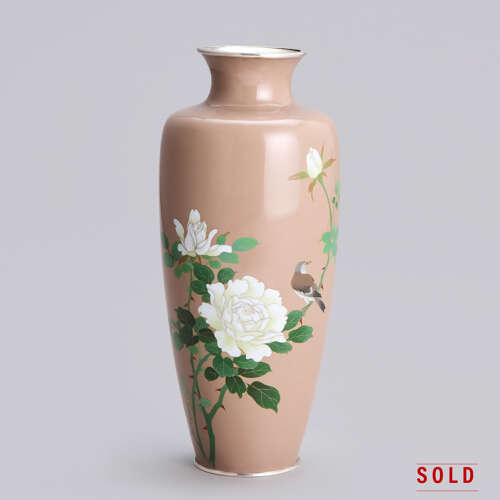
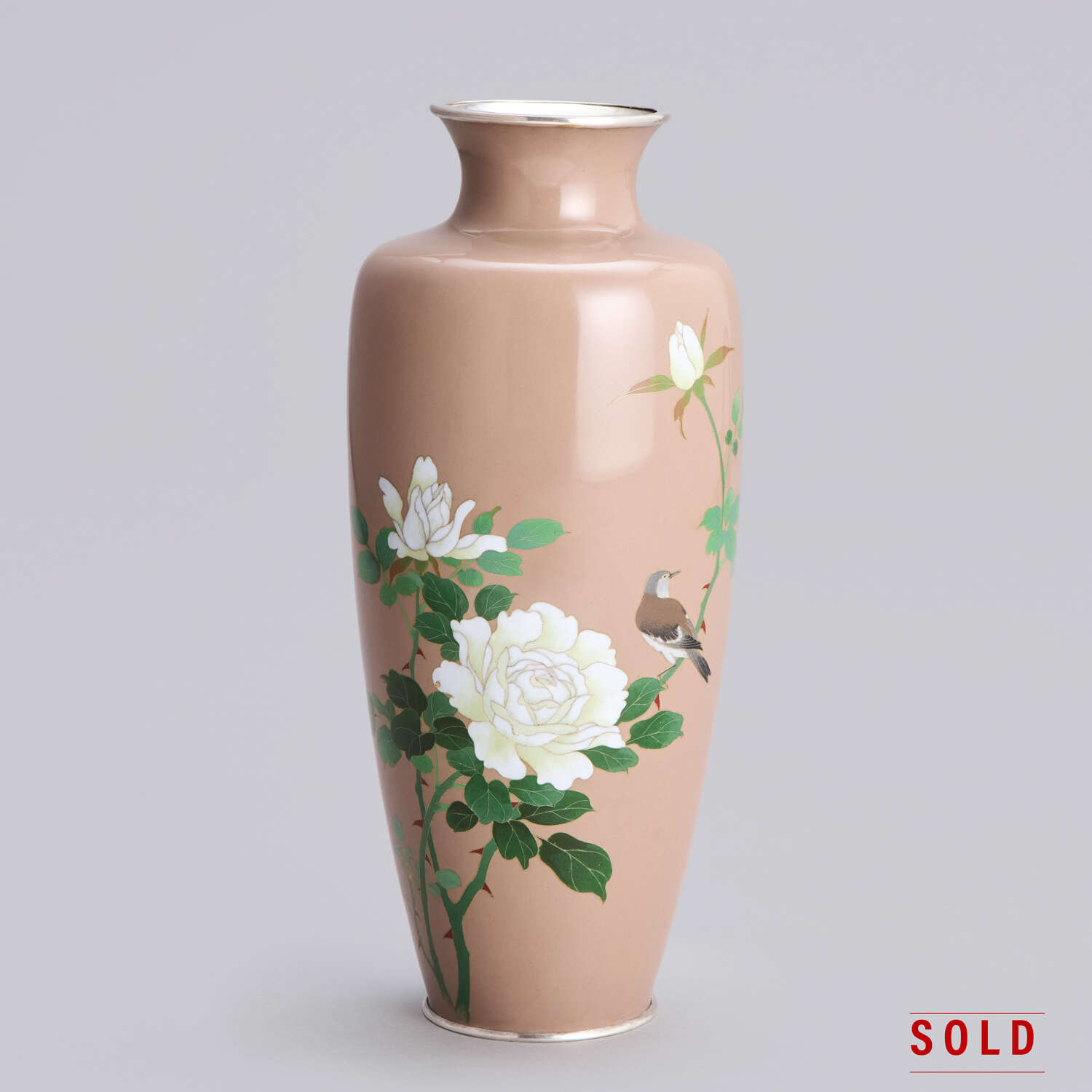
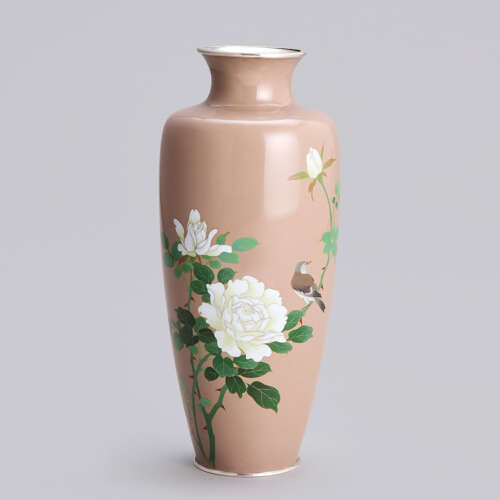
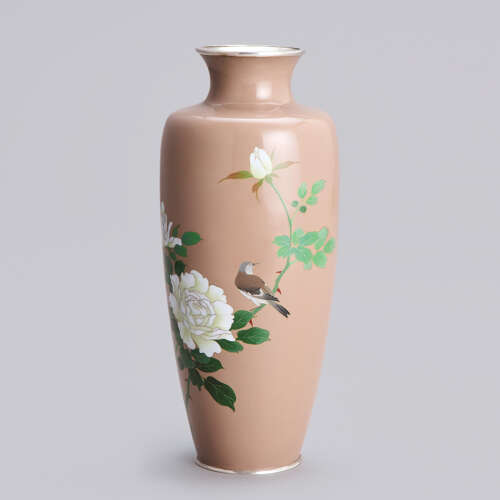
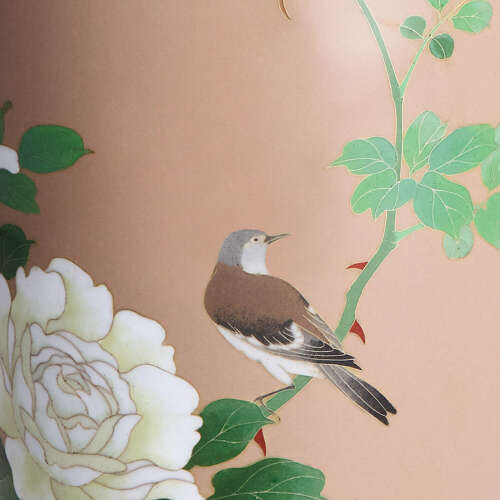
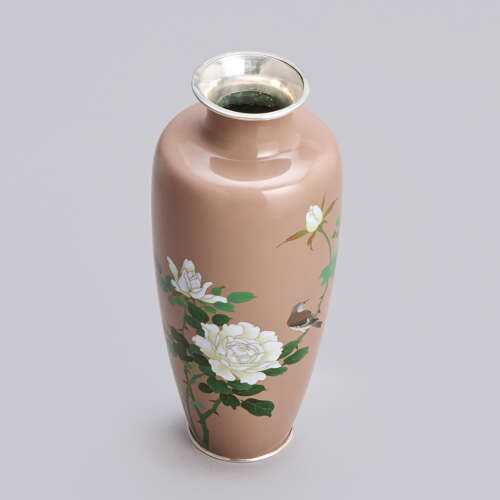
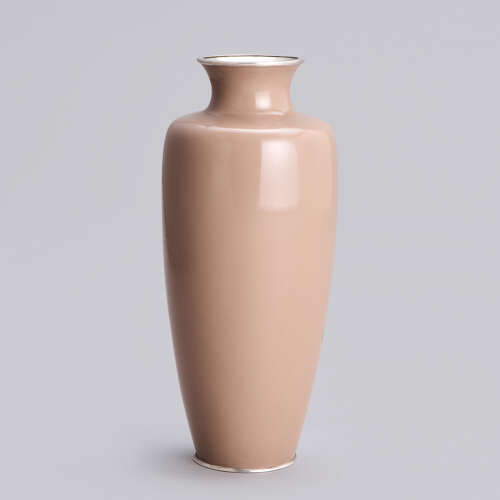
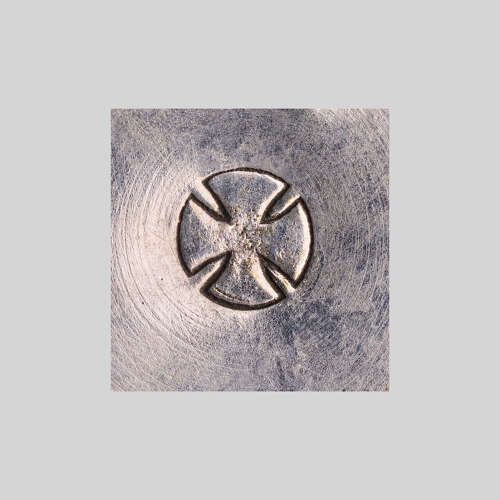
Japanese cloisonné enamel vase of baluster form finely worked in silver wire decorated with a sparrow perched on a blooming rose bush, all set against a light brown ground, applied with silver mounts. The base stamped with the Andō Jūbei mark 安藤重兵衛, Taishō period (1912-1926). The distinctive cross-shaped mark derives from the Japanese character for ‘ten’ ( 十, Jū) which is the first syllable of the name Jūbei.
The Andō Cloisonné Company was founded in 1880 by Maeda Matsukichi 前⽥田松吉 who was later joined by Andō Juzaburo known as Andō Jūbei I 安藤重兵衛 (1876-1953). The firm quickly rose to prominence, supplying works to the Imperial Household in the early 1890s and earning international acclaim.
During the Meiji (1868-1912) and Taishō (1912-1926) periods, the company was a frequent medal recipient at major international expositions notably: in 1893 at the World’s Columbian Exposition in Chicago, in 1900 at the Exposition Universelle in Paris, in 1901 at the Glasgow International Exhibition, in 1904 at the Louisiana Purchase Exposition in St. Louis, in 1910 at the London Japan-British Exhibition and in 1926 at the Sesqui-Centennial International Exposition in Philadelphia.
Reference: ‘Japanese Cloisonné Enamels: The Seven Treasures’ by Gregory Irvine, London, Victoria and Albert Museum, 2006, pg. 123.
‘Meiji no Takara 明治の宝 Treasures of Imperial Japan, the Nasser D. Khalili Collection’, The Kibo Foundation 1995, Enamel Vol. III, no. 38.
All our pieces come with a BADA Certificate of Provenance (The British Antiques Dealer's Association) and are inclusive of free U.K. shipping & insurance. Please inquiry for International shipping.