Code: 10307
Dimensions:
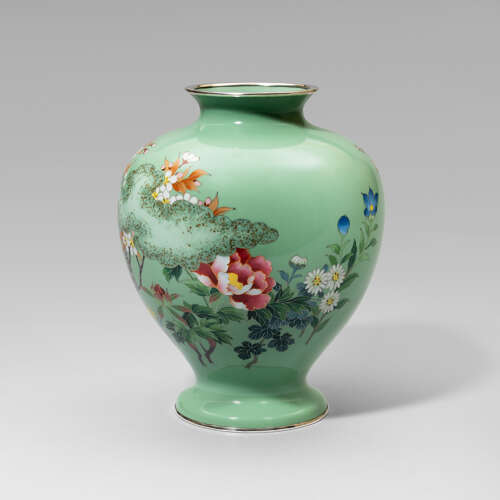
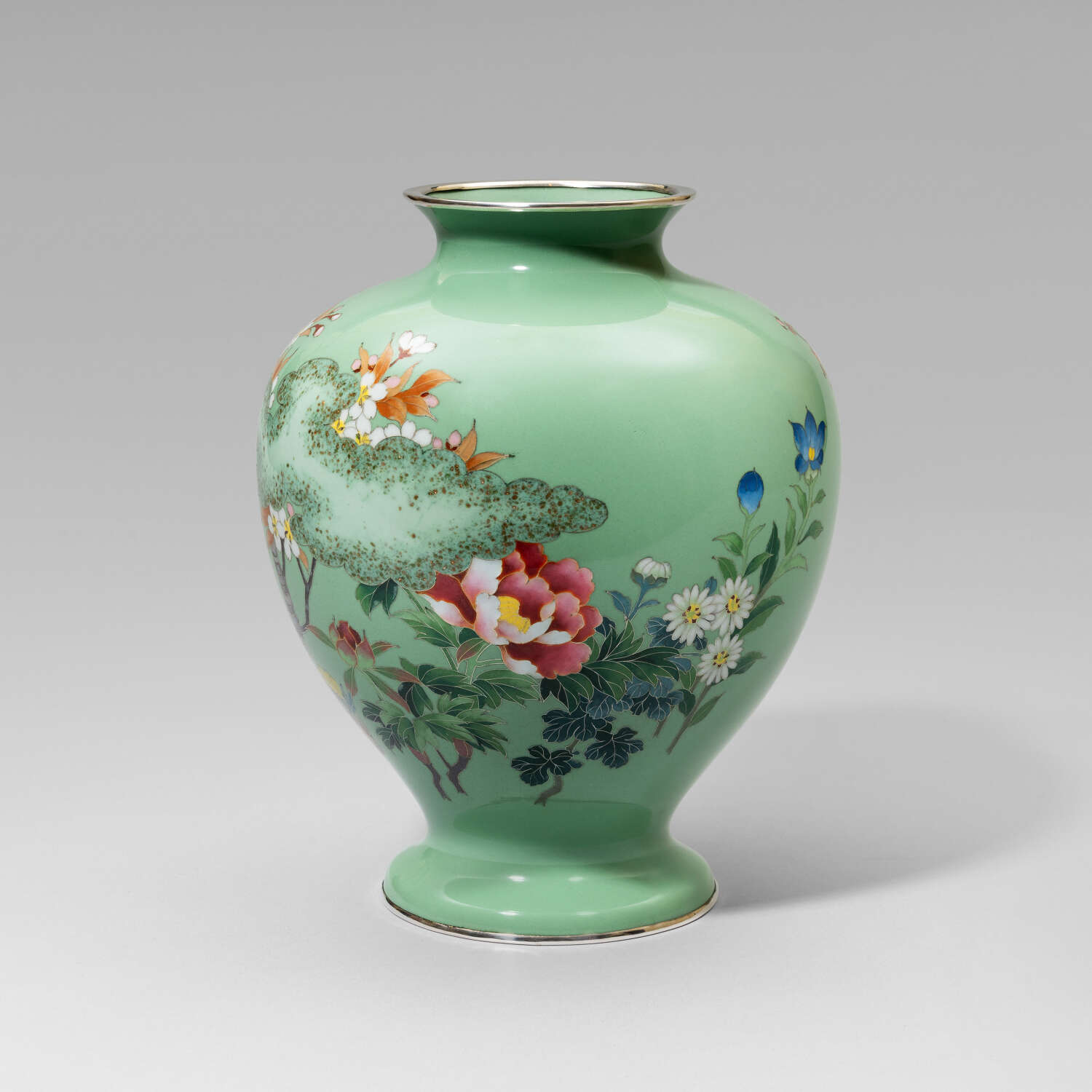
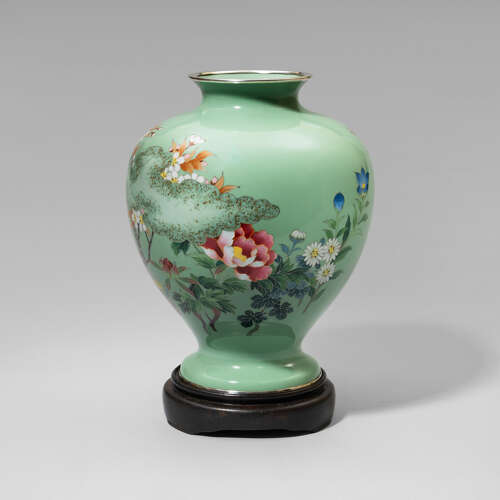
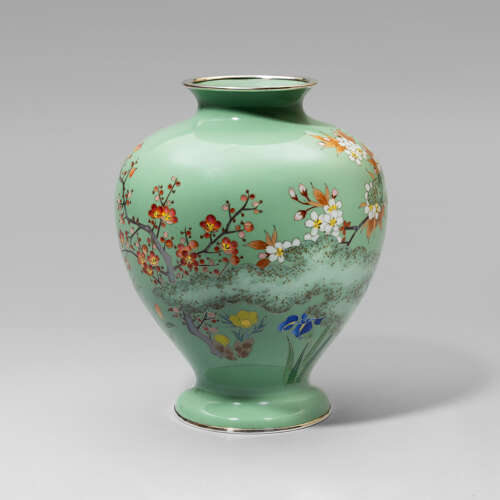
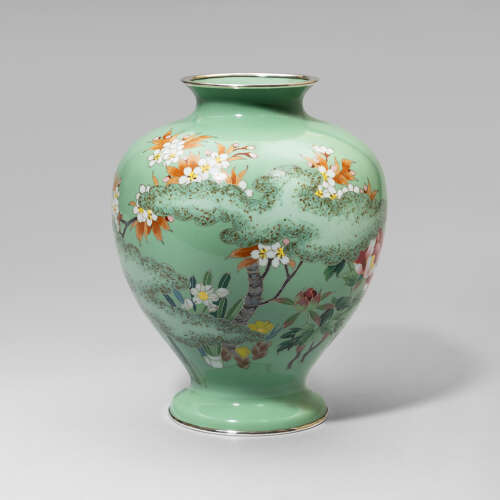
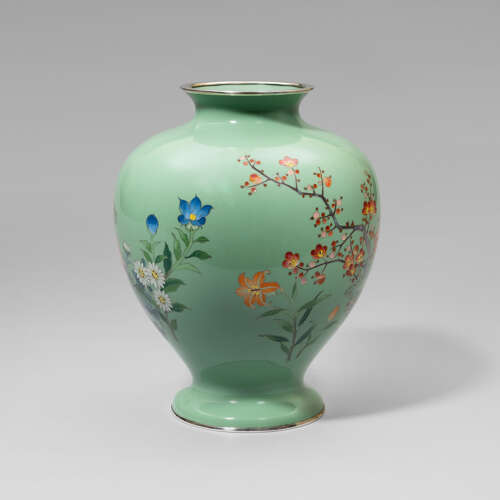
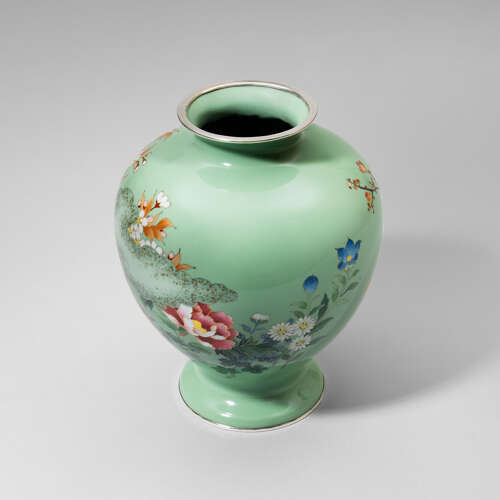
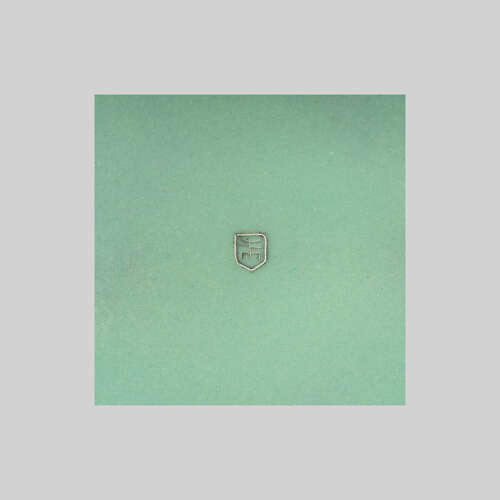
Japanese cloisonné enamel vase delicately worked in silver wire with seasonal flowers: gentians, cherry blossom, chrysanthemum, iris, plum, and peony symbolising the four seasons. It is applied with silver rim and foot on a pale celadon ground. The base bears the silver yūsen mark of the Ikoma Studio 生駒 of Osaka, and is accompanied by a hardwood stand, Taishō period 1912-1926.
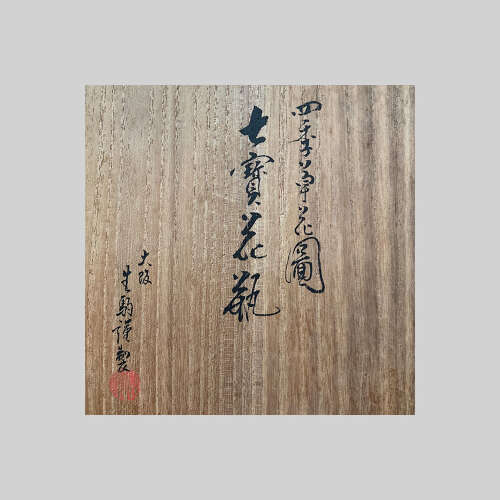
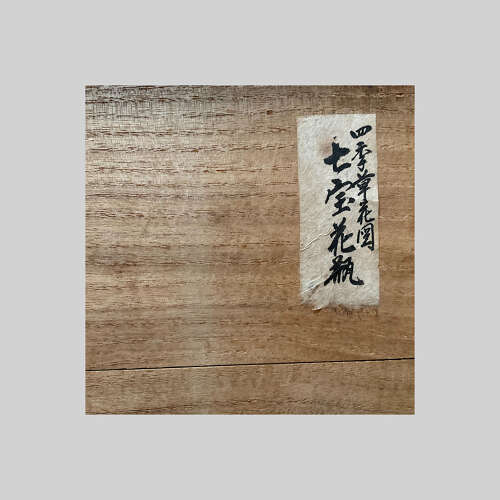
The tomobako wood storage box inscribed Shiki soka zu, Shippo Kabin, Osaka, Ikoma kinsei 四季草花圖,七寶花瓶. 大阪, 生駒謹製 (cloisonné vase with design of seasonal flowers and plants respectfully made by the Ikoma Studio, Osaka with the seal Ikoma 生駒). And also with paper label inscribed Shiki soka zu, Shippo kabin 四季草花図, 七宝花瓶 (a cloisonné vase with design of seasonal flowers and plants).
The motif of seasonal flowers carried deep resonance in Japanese aesthetics, reflecting both the cyclical nature of time and the transience of beauty, a central theme in Japanese art and literature. Each flower evoked particular associations: gentians are associated with autumn, cherry blossoms signifying the fleeting brilliance of spring, chrysanthemums symbolising Imperial virtue and longevity, plum blossoms heralding renewal, irises linked to protection and vitality, and peonies embodying wealth and elegance. Collectively, these motifs celebrated the harmonious rhythm of the natural world.
Reference: 'The Art of Japanese Cloisonné Enamel: History, Techniques and Artists, 1600 to the Present', by Frederich T. Schneider, North Carolina, 2010, p. 246 no. 74.
All our pieces come with a BADA Certificate of Provenance (The British Antiques Dealer's Association) and are inclusive of free U.K. shipping & insurance. Please inquiry for International shipping.