Code: 10308
Dimensions:
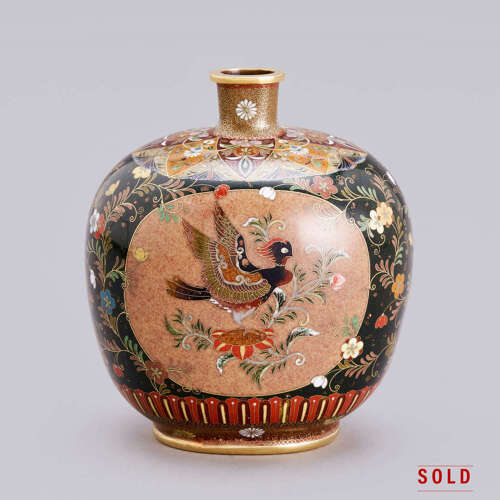
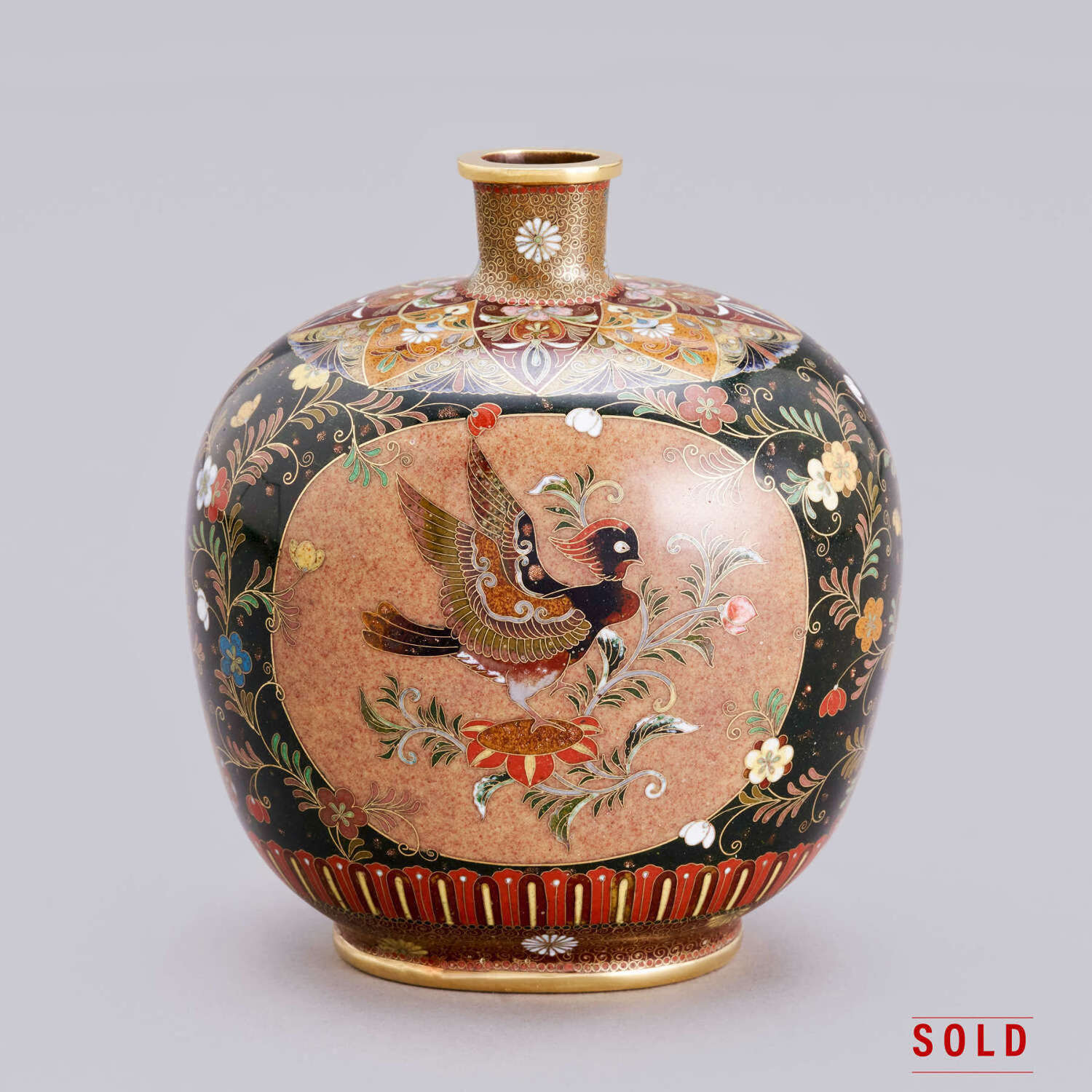
Japanese cloisonné vase of ovoid shape worked in gold wires with ho-o birds in flight above shield-shaped panels of foliate motifs on a lustrous black ground worked in tightly scrolled gilt wires with chrysanthemums, cherry blossoms and scrolling vines, the foot banded with chrysanthemums petals and details flecked with aventurine signed on a silver tablet Kyoto Namikawa 京都 並河 (workshop of Namikawa Yasuyuki) late Meiji period (1868-1912).
The mythical hō-ō bird is a symbol of longevity, power, wisdom and is a messenger of immortals. It is also said to appear only at times of enlightened rule, making it a symbol of peace and stability.
Namikawa Yasuyuki 並河靖之(1845-1927) was one of the most cloisonné artist of the Meiji era. He started his business in Kyoto in 1873 and around the 1880s became successful and built a large workshops employing 20 people and a showroom where he was selling his finest pieces directly to private clients, and also exhibiting at various international expositions. Between 1876 and 1904 he won 11 overseas awards and in 1896 was appointed to the ranks of Teishitsu Gigeiin (Artist-Craftsmen to the Imperial Household).
Reference: Frederic T. Schneider, The Art of Japanese Cloisonné Enamel: History, Techniques and Artists, 1600 to the Present, Jefferson, NC, McFarland, 2010, pp.86–87.
All our pieces come with a BADA Certificate of Provenance (The British Antiques Dealer's Association) and are inclusive of free U.K. shipping & insurance. Please inquiry for International shipping.