Code: 10280
Dimensions:
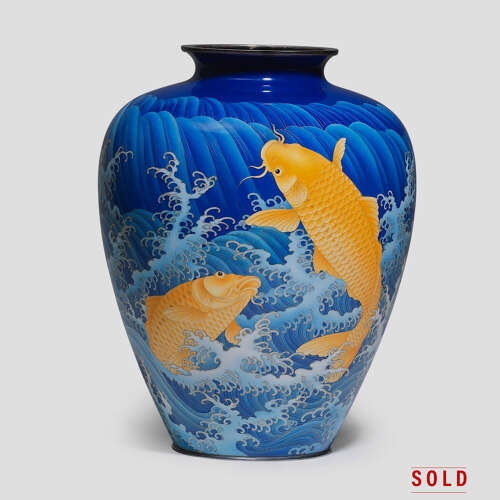
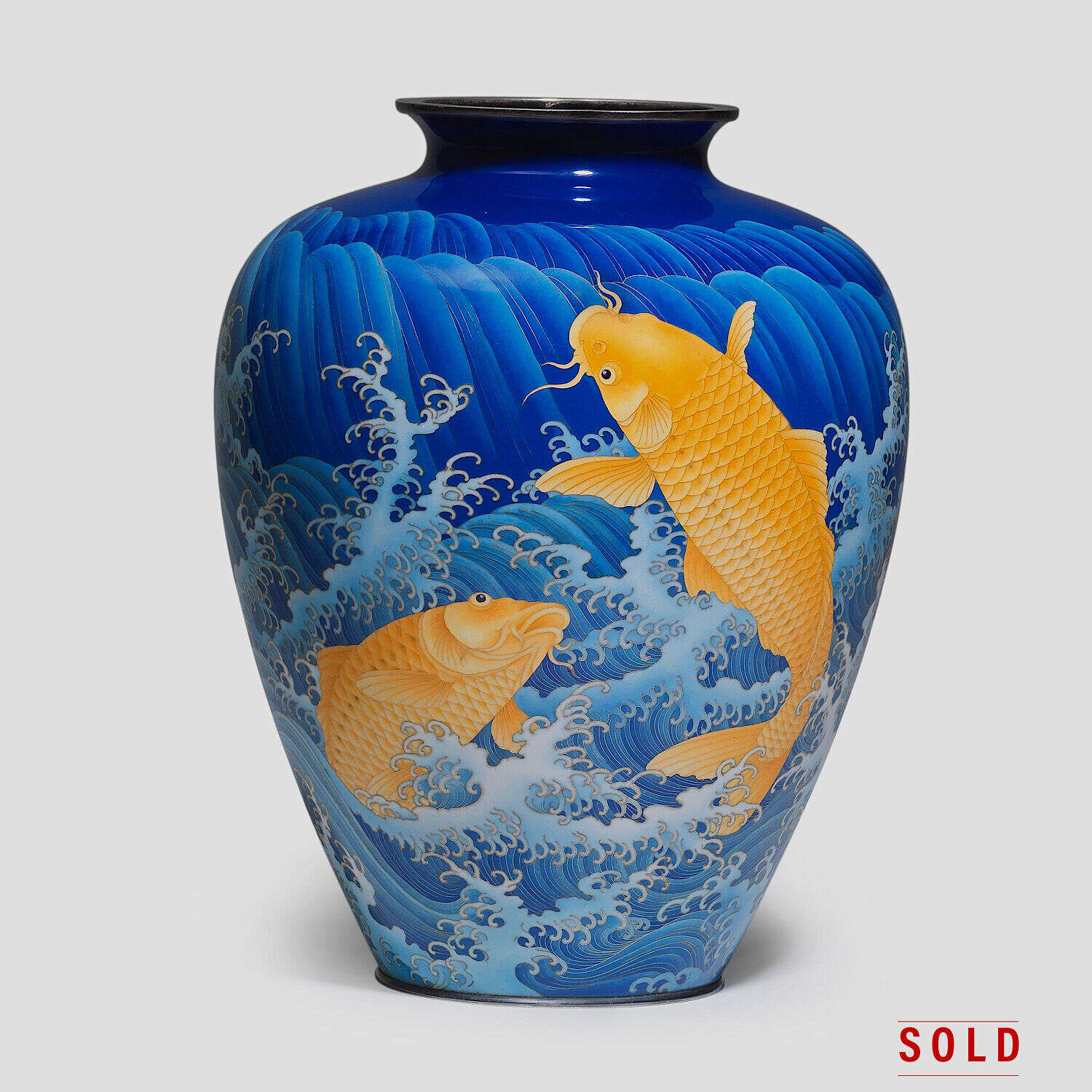
Japanese cloisonné enamel vase of baluster shape finely worked in silver and gold wire decorated with koi carps leaping up a waterfall on a brilliant blue ground applied with silver mounts. The foot rim marked Jungin 純銀 (pure silver) and the base signed in an oval reserve Andō sei 安藤製 (made by Andō Jūbei), Taishō period (1912-1926).
The original tomobako box inscribed on the lid Shippo asobu koi kabin, Jūbei 七寶遊鯉花瓶, 重兵衛 (cloisonné vase with the design of swimming carps by Andō Jūbei) with red seal mark Andō kinsei 安藤 謹製 (respectfully made by Andō).
The Koi (nishikigoi 錦鯉) is symbolic of courage, strength of will and steadfastness in adversity. They were brought to Japan from China in the 1st Century A.D. as a source of food, but in the late19th century Japanese farmers began breeding the ornamental koi as pets for their vibrant colours and became prized possession.
Many legends are associated with the koi, the most famous is the ‘Dragon’s gate waterfall’ it tells the story of thousands koi fish swimming upstream theYellow River against strong currents, the ones that reach the top of these huge waterfalls transform into dragons.This fable teaches that through perseverance you may overcome all difficulties in life.
In Japan it also symbolises good fortune and fertility. During the Boys Festival called Tango no Sekku 端午の節句句, that takes place every 5th May all families with a son born in the year, put a coloured carp streamers outside their homes raised on bamboo poles, as the koi is the symbol of the male child.
The Andō Cloisonné Company was founded in 1880 by Maeda Matsukichi 前⽥田松吉 who was later joined by Andō Juzaburo known as Andō Jubei I 安藤重兵衛 (1876-1953). In 1891 and 1892 the Imperial Household purchased several pieces from the company. During the Meiji (1868-1912) and Taishō (1912-1926) periods, they were awarded medals at many Expositions in Chicago 1893, Paris 1900, Glasgow 1901, St. Louis 1904, London Japan-British Exhibition 1910 and Philadelphia 1926.
Reference: ‘The Art of Japanese Cloisonné Enamel: History, Techniques and Artists, 1600 to the Present’, by Frederich T. Schneider, North Carolina, 2010, pg. 241, no.7.
'Meiji no Takara 明治の宝 Treasures of Imperial Japan, the Nasser D. Khalili Collection', The Kibo Foundation 1995. Enamel Vol. III, no. 38.
All our pieces come with a BADA Certificate of Provenance (The British Antiques Dealer's Association) and are inclusive of free U.K. shipping & insurance. Please inquiry for International shipping.