Code: 10238
Dimensions:
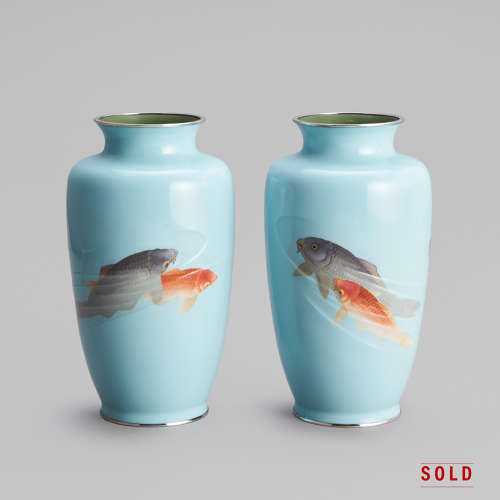
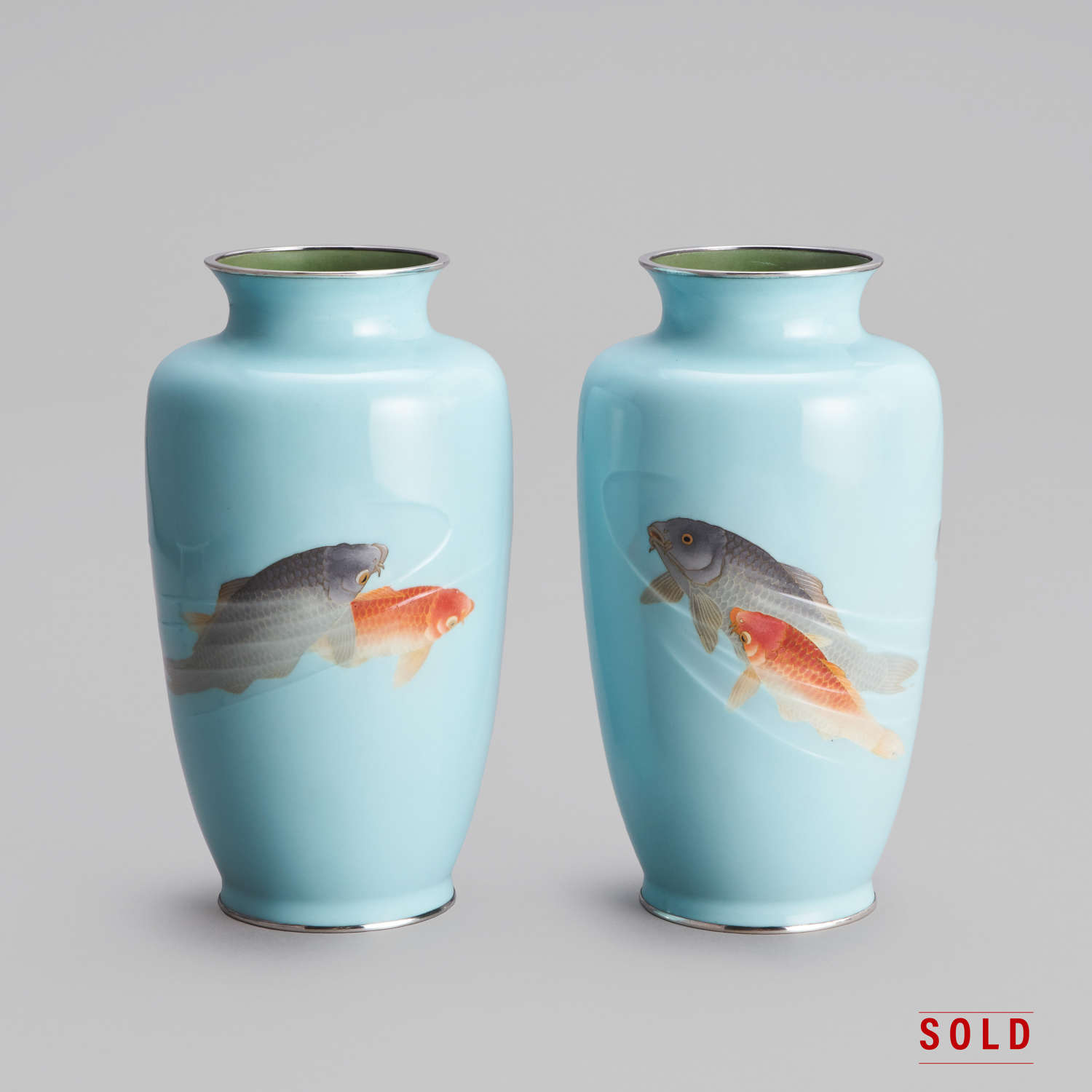
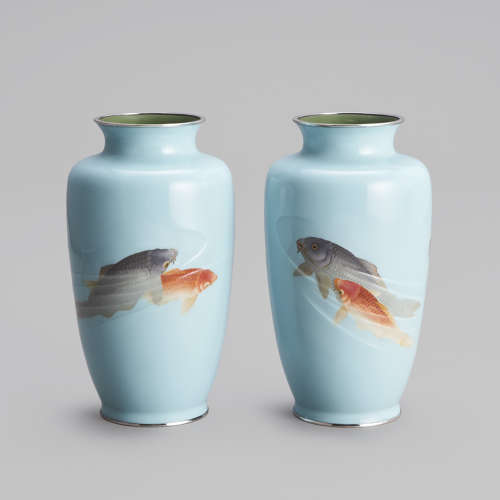
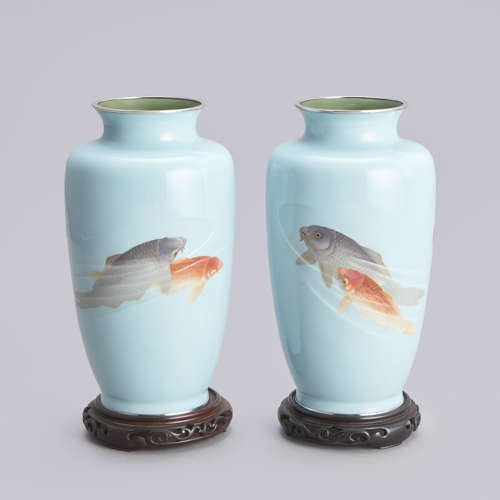
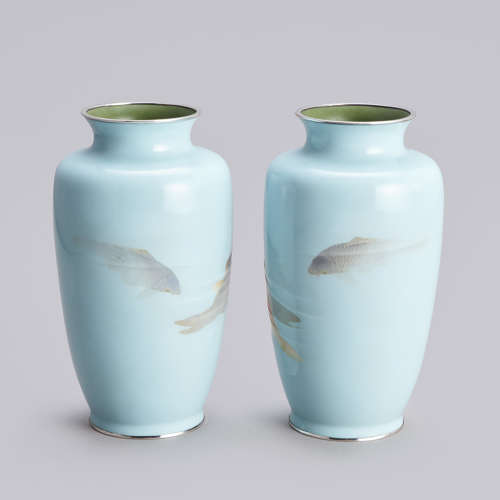
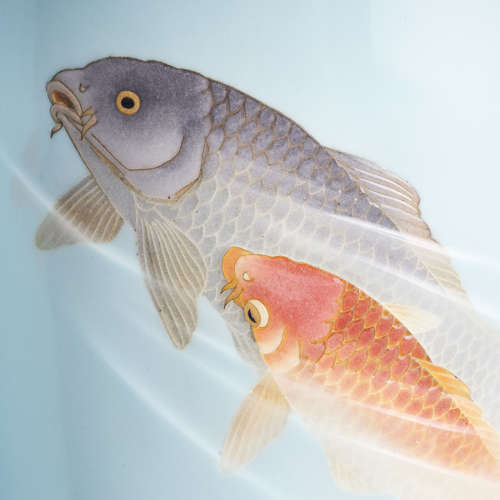
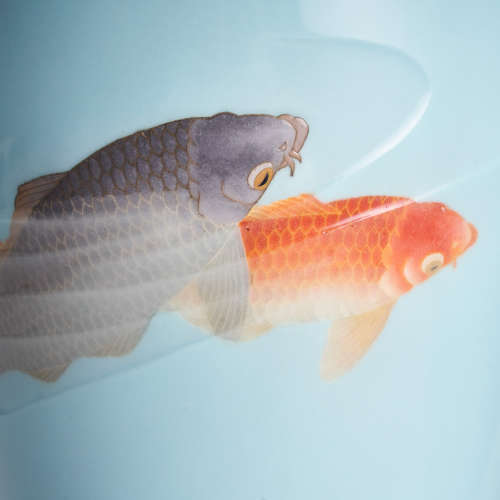
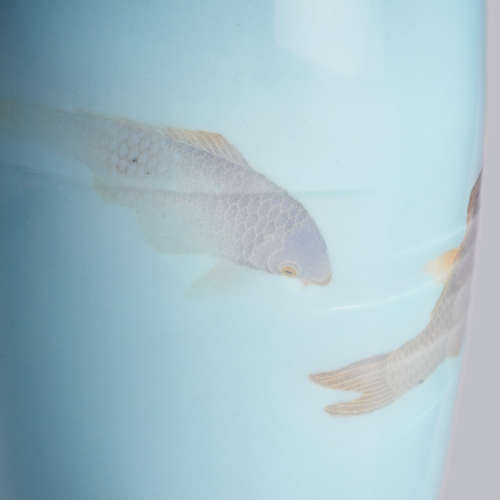
Japanese pair of cloisonné enamel vases of baluster body worked in silver and gilt wires decorated in various colour enamels with four koi carps swimming through rippling water, the scales of the fish rendered in moriage (in relief) and the submerged body in musen (wireless) applied with silver rim and foot on a pale turquoise ground. The base inlaid with the wire seal mark of Gonda Hirosuke of Nagoya with tomobako storage box and fitted wood bases,Taishō period (1912-1926).
The Koi (nishikigoi 錦鯉) is symbolic of courage, strength of will and steadfastness in adversity.
Gonda Hirosuke 権田広助(1865-1937) was taught by Hayashi Kodenji and open his Nagoya enamelling workshop in 1891.
He was very talented artist well known for his cloisonné works with the design of carps in raised relief enamels, and also was a sub-contractor to Ando. He was awarded medals at many International expositions in 1899 Paris, in 1893 Chicago, in 1904 St Louis and in 1905 Liège. He was extremely talented producing cloisonné enamels in many varied techniques.
After 1910 he started to work with his son Jumatsu (1893-1939) known as Hirosuke II. For three decades they worked together and when Gonda died in 1937, his son also died two years later, which makes it impossible to distinguish who made any particular piece.
There is a very similar vase by Gonda Hirosuke in the collection of the Shosenkyo Cloisonné Museum in Kofu (Shosenkyo Ropeway Cloisonné Art Museum, pp20/21).
Moriage (lit. ‘piling-up’) is a painstaking technique, which requires extreme care, especially at the polishing stage; it involves the building up layers of enamel to produce a three-dimensional effect. It was ideally suited to natural subjects such as plants and flowers but was used for the depiction of other subject matter as well and works particularly well for depicting fish swimming through ripples of water.
Reference: Frederic T. Schneider, The Art of Japanese Cloisonné Enamel: History, Techniques and Artists, 1600 to the Present, Jefferson, NC, McFarland, 2010, pg.121, pg. 242 no. 23.
All our pieces come with a BADA Certificate of Provenance (The British Antiques Dealer's Association) and are inclusive of free U.K. shipping & insurance. Please inquiry for International shipping.