
Code: 10258
Dimensions:
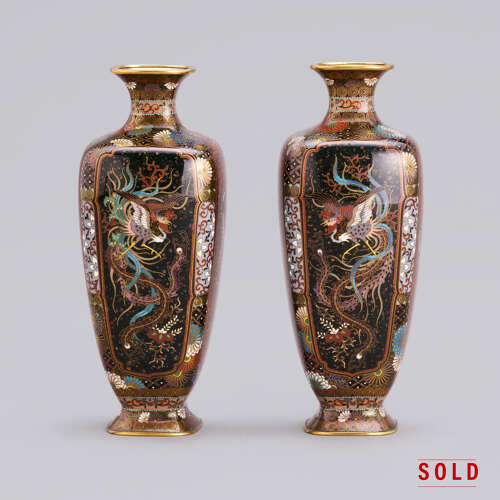
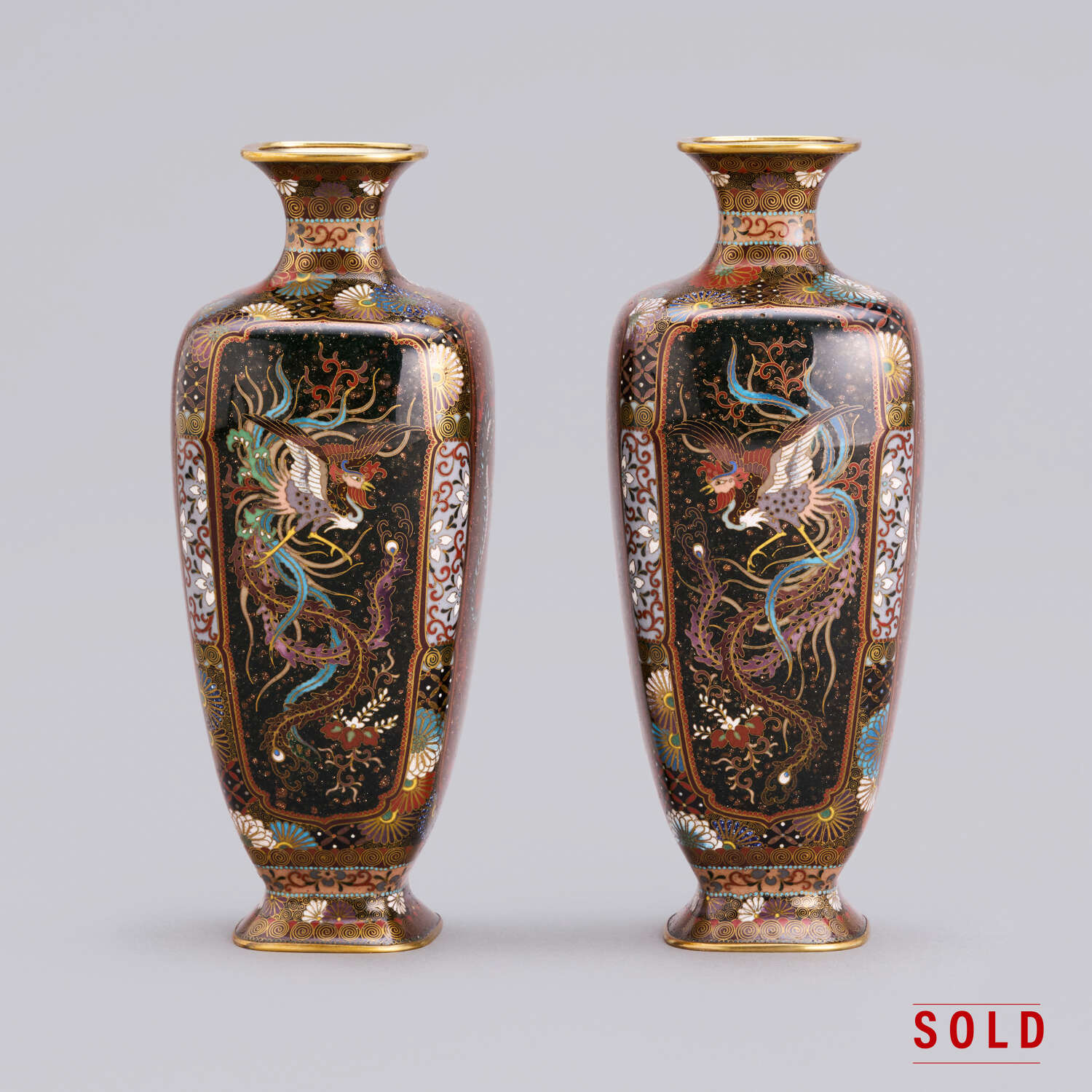
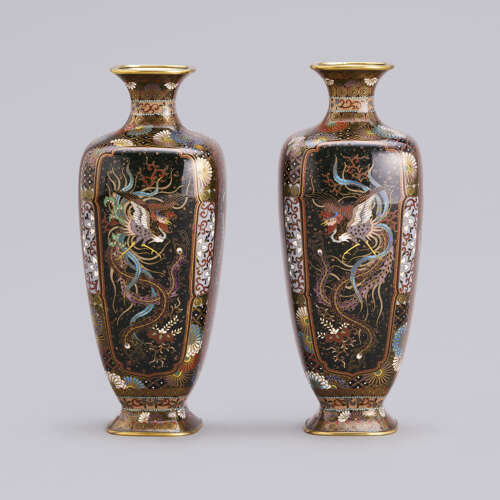
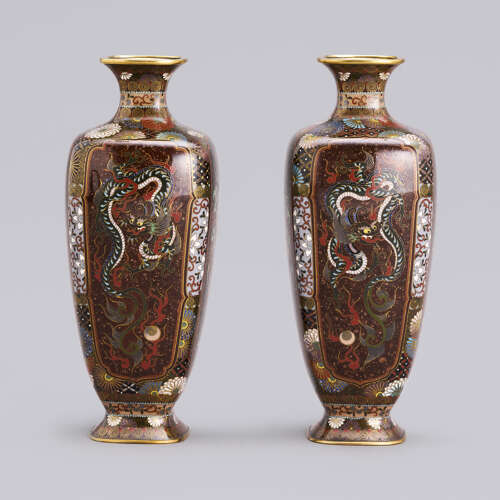
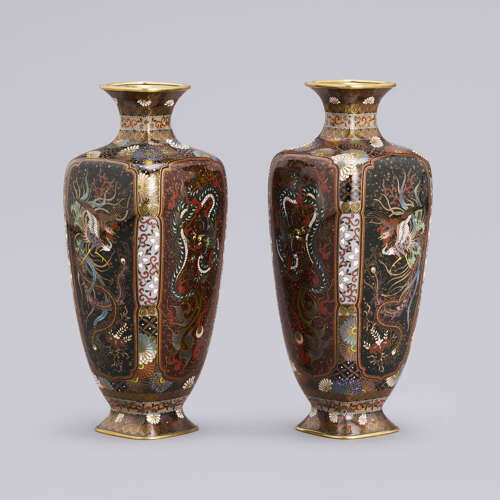
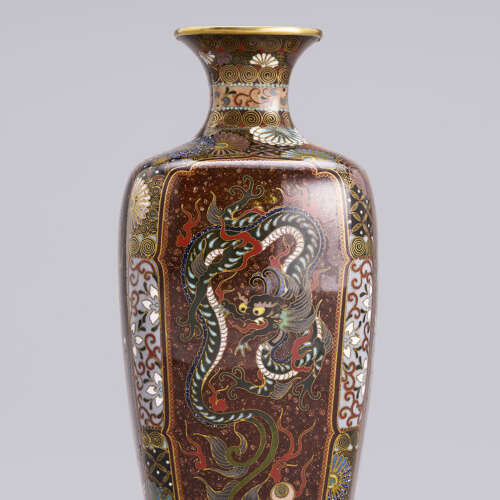
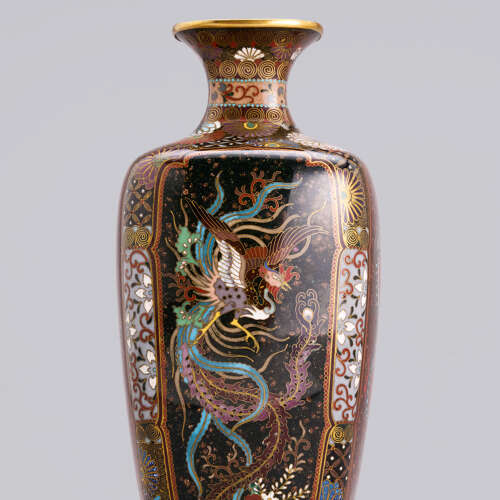
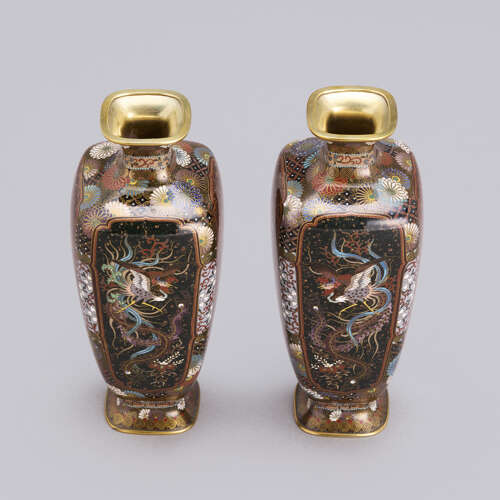
Japanese pair of cloisonné enamel vases of square-section form finely worked in gilt wire decorated with panels of ho-o birds (phoenix) amid paulownia trees, alongside swirling dragons encircling the flaming sacred jewel, on aventurine flecked grounds. The necks and shoulders with bands of formal scrollwork, chrysanthemums and tight whirls, applied with gilt rims. The bases stamped with the two characters within a tripod incense-burner mark of Ōta Toshirō of Nagoya, Taishō period (1912-1926).
The hō-hō is a mythical creature with a flowing tails often referred as a phoenix. The presence of this sacred bird was considered to be a very auspicious omen as it only appeared in peaceful and prosperous lands. It was also adopted as a symbol of the Imperial household. The association with the dragon is symbolic of marital harmony. The use of paulownia leaves further emphasises connections to imperial authority.
Ōta Toshirō 大田 俊郎 was a prominent figure among the Nagoya school of cloisonné artists. Trained under Hayashi Shōgōro and by his father Tsukamoto Jin’emon, manager of the renowned Shippō Kaisha Factory, Toshirō established his workshop in 1868 and remained active until the 1930s.
Alongside his brothers Kumeno Teitarō, Tsukamoto Jimbei, and Tsukamoto Masubei, they all became important Nagoya enamelers.
Toshirō contributed significantly to the international recognition of Japanese enameling. He received multiple international awards during the late Meiji and Taishō eras notably in 1910 at the Brussels Exposition Universelle Grand Prix, in 1904 at the St. Louis Purchase Exposition, in 1905 at the Liège International Exposition and in 1926 at the Philadelphia Sesqui-Centennial International Exposition.
Reference: ‘Japanese Cloisonné Enamels: The Seven Treasures, London, Victoria and Albert Museum’, by Gregory Irvine, London, Victoria and Albert Museum, 2006, pg. 73.
‘The Art of Japanese Cloisonné Enamel: History, Techniques and Artists, 1600 to the Present’, by Frederich T. Schneider, North Carolina, 2010, no. 165 pg. 253.
All our pieces come with a BADA Certificate of Provenance (The British Antiques Dealer's Association) and are inclusive of free U.K. shipping & insurance. Please inquiry for International shipping.