

Code: 10268
Dimensions:
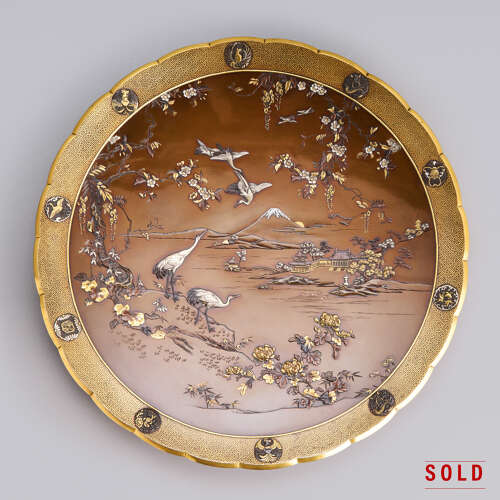
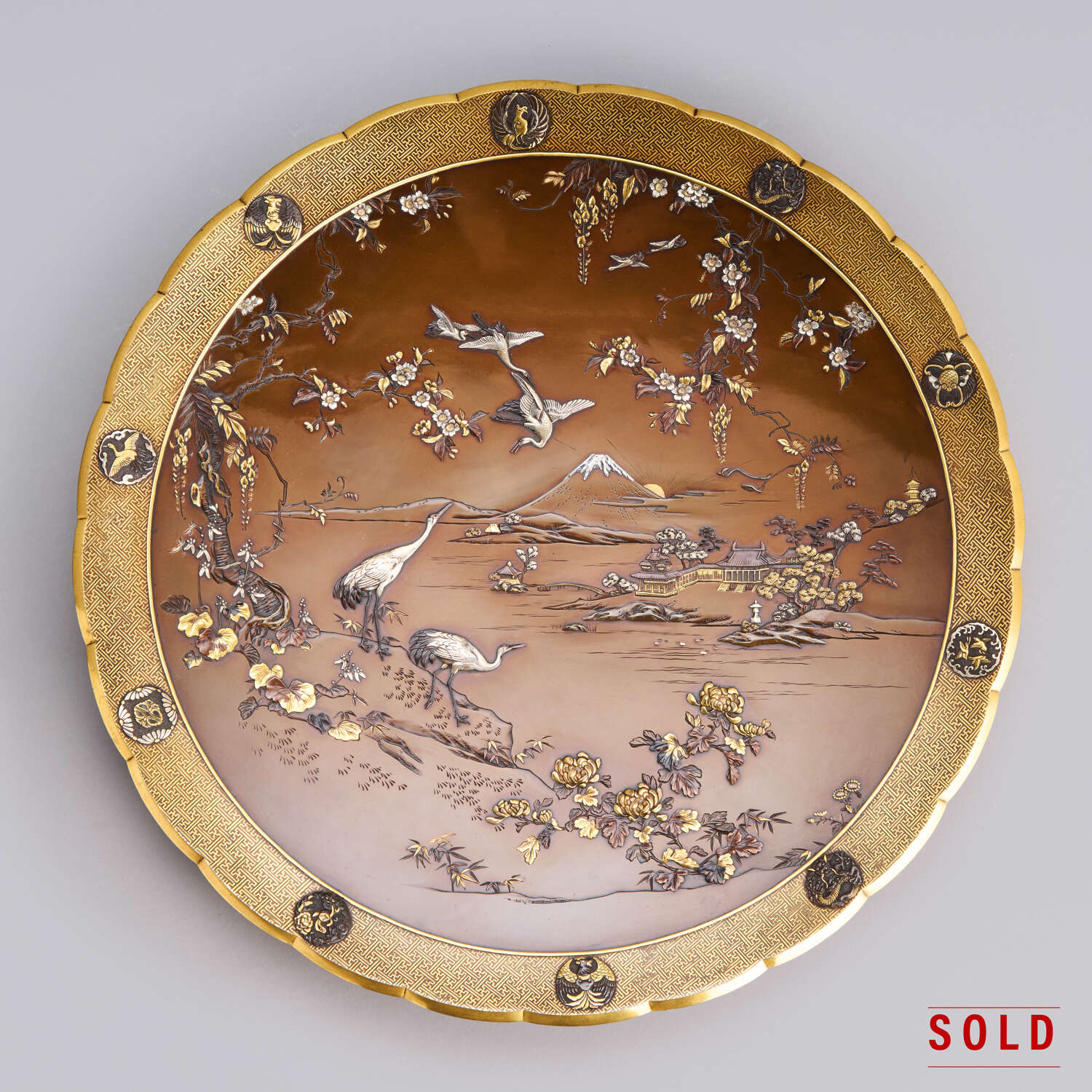
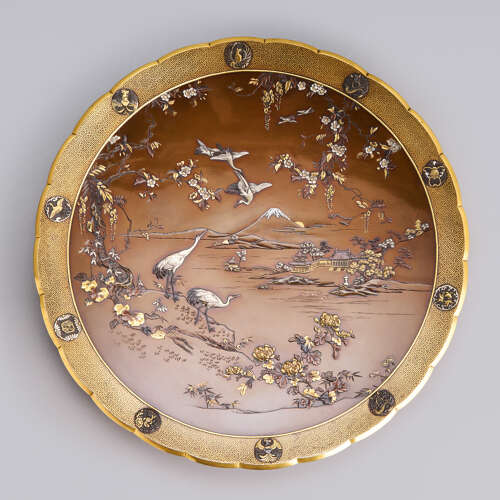
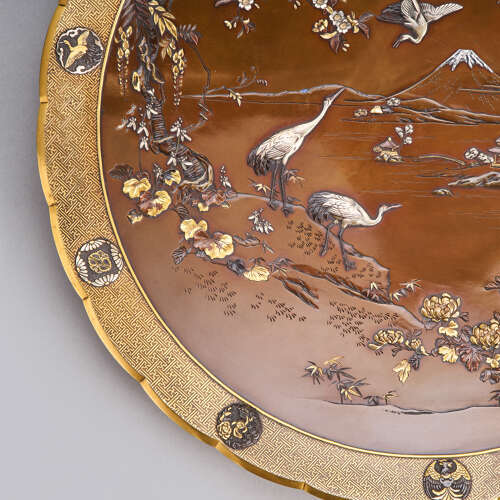
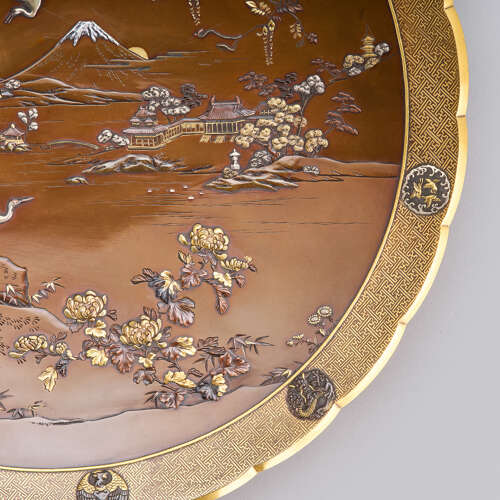
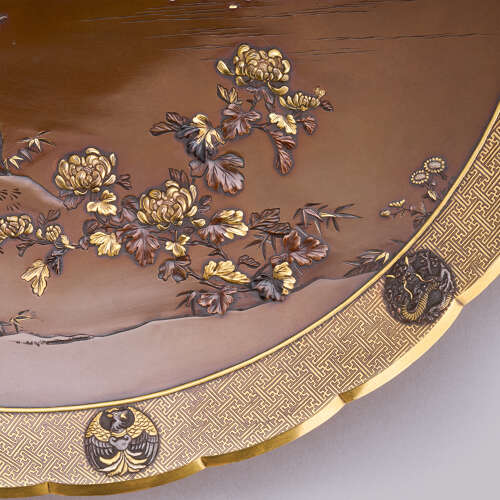
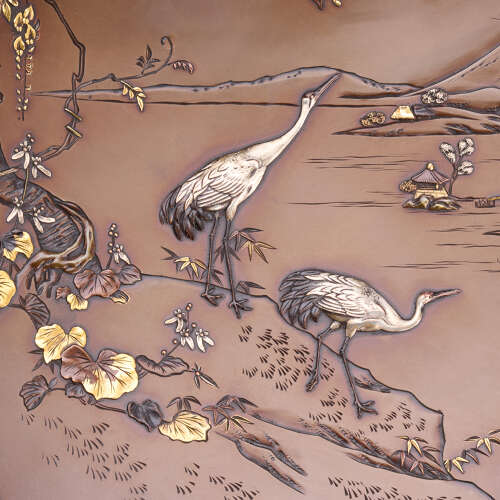
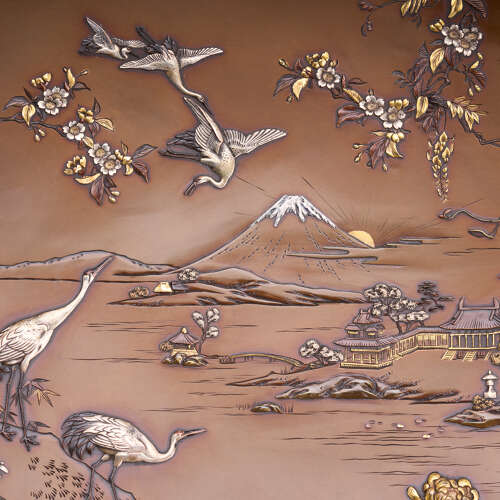
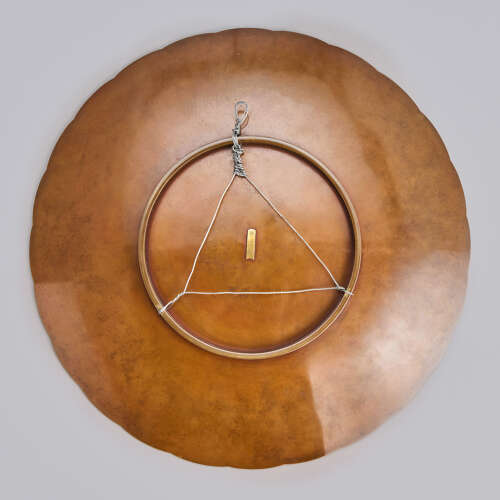
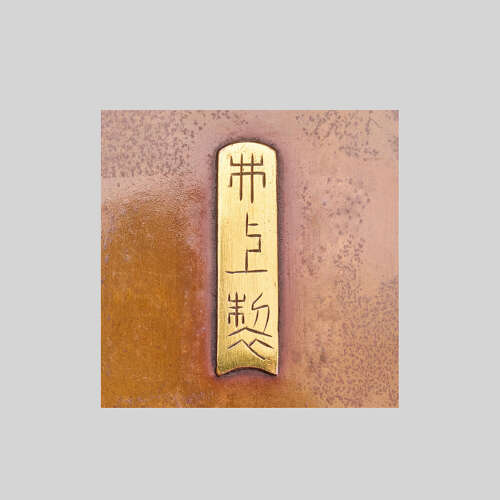
Japanese bronze inlaid dish finely decorated in gold, silver, shakudo and copper taka-zogan and hira-zogan depicting graceful egrets soaring above pavilions nestled beneath a rising sun, with the iconic Mount Fuji in the distance. The tranquil landscape is enriched with blooming cherry blossoms, wisteria and chrysanthemums. The rim with a geometric pattern in gold damascene punctuated by roundels depicting auspicious motifs such as a dragon, a phoenix, birds and butterflies signed in a rectangular reserve with chiselled characters Inoue zo 井上製 (made by Inoue of Kyoto 京都井上), Meiji period (1868-1912).
Mount Fuji (Fujisan 富士山) is Japan’s most revered and iconic peak, situated within the scenic Fuji-Hakone-Izu National Park. In 2013, it was designated a UNESCO World Heritage Site for its cultural and spiritual significance.
Historically regarded as sacred by practitioners of Shinto and Buddhism, Mount Fuji has served as a site of pilgrimage and artistic inspiration for centuries. Its majestic form has been immortalized in countless works of art, most notable in the woodblock print series Thirty-Six Views of Mount Fuji (富嶽三十六景) by the eminent ukiyo-e artist Katsushika Hokusai, produced between 1826 and 1832. These prints not only exemplify Edo-period aesthetics but also underscore the mountain’s enduring symbolic presence in Japanese identity and landscape representation.
Reference: ‘Meiji no Takara 明治の宝 Treasures of Imperial Japan, the D.Khalili Collection’, the Kibo Foundation 1995, Metalwork Part I, no. 12, and Metalwork Part II, no. 87.
All our pieces come with a BADA Certificate of Provenance (The British Antiques Dealer's Association) and are inclusive of free U.K. shipping & insurance. Please inquiry for International shipping.