



Code: 10269
Dimensions:
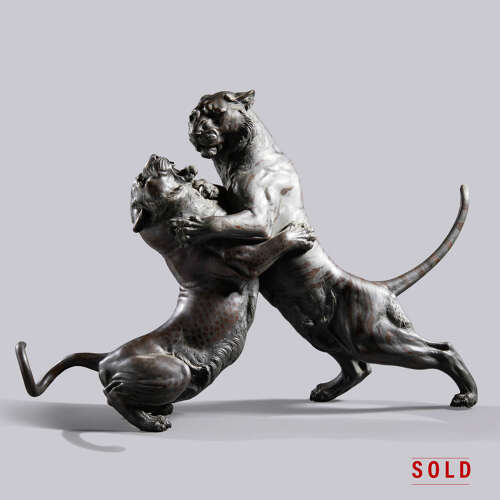
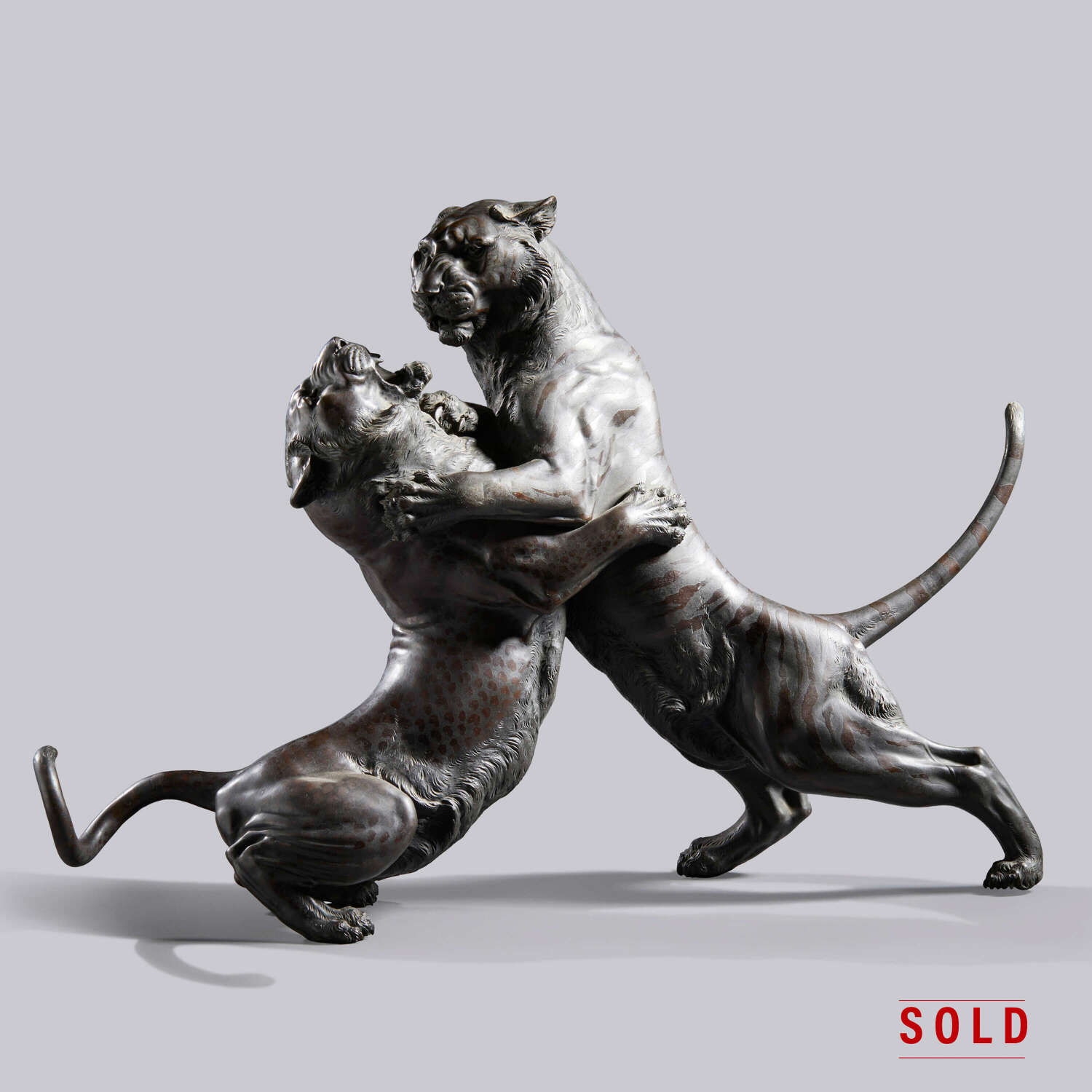
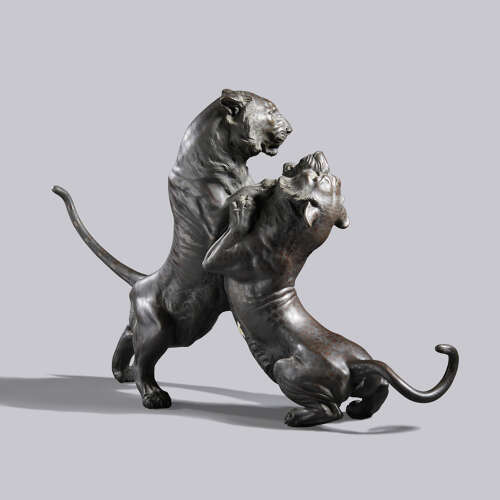
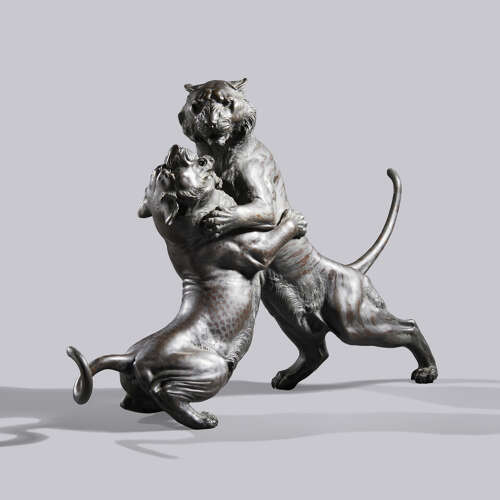
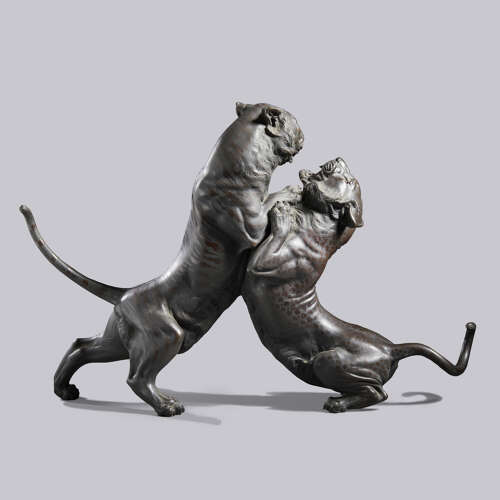
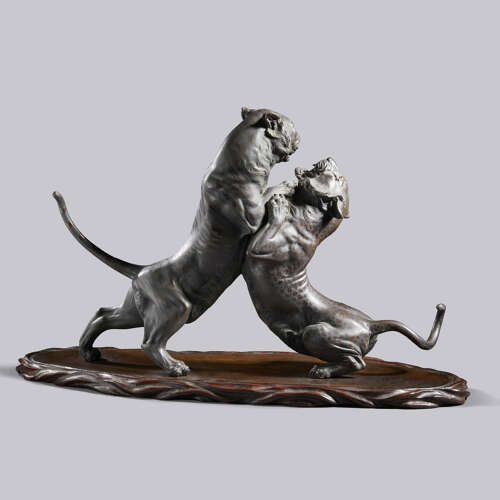
Japanese dynamic bronze group depicting a fierce battle between a tiger and a leopard, naturalistically modelled to convey the power, movement and intensity of these animals mid-combat. Both beasts rear up on hind legs, entwined in a struggle, their sinewy bodies carved with meticulous detail. The tiger’s stripes and the leopard’s rosettes are finely rendered in contrasting shades of rich brown patination, signed in square reserve Hanehiroya sei 羽廣屋製 (made by the Hanehiro studio), Meiji period (1868-1912). The group is mounted on a carved hardwood base enhancing its sense of drama and balance.
The tiger (tora虎), one of the twelve animal of the Zodiac is symbolic of strength and courage while the leopard (hyō ヒョウ) is a symbol of resilience and tenacity.
The Hanehiroya 羽廣屋 (羽広屋) was associated with esteemed metalwork artist Kakuha Kanzaemon IX 角羽勘左衛門( also known as Kakuha Zenjiro), whose family had been engaged in metalwork for many generations in Takaoka, Toyama Prefecture. Active in the port town of Yokohama, the studio was known for its collaborations with prominent artists such as Sano Takachika and for producing finely crafted metalwork for domestic and export markets.
Reference:‘The Golden Age of Japanese Okimono, the Dr. Kanter Collecton’, Laura Bordignon, ACC Woodbridge 2010, Metalwork, pp. 252-253.
‘Japanese Metalwork of the Meiji Period (1868-1912)', B. Davies, London 1990, no. 18.
All our pieces come with a BADA Certificate of Provenance (The British Antiques Dealer's Association) and are inclusive of free U.K. shipping & insurance. Please inquiry for International shipping.