Code: 10263
Dimensions:
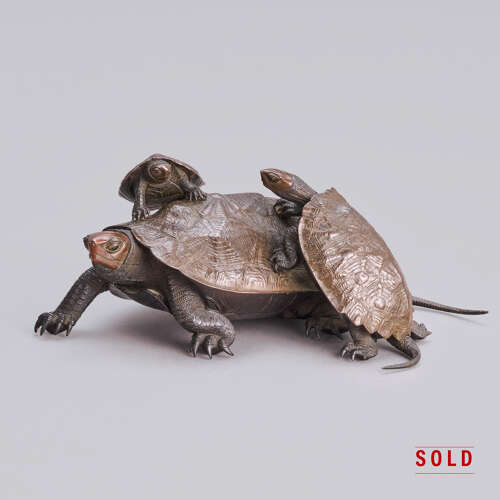
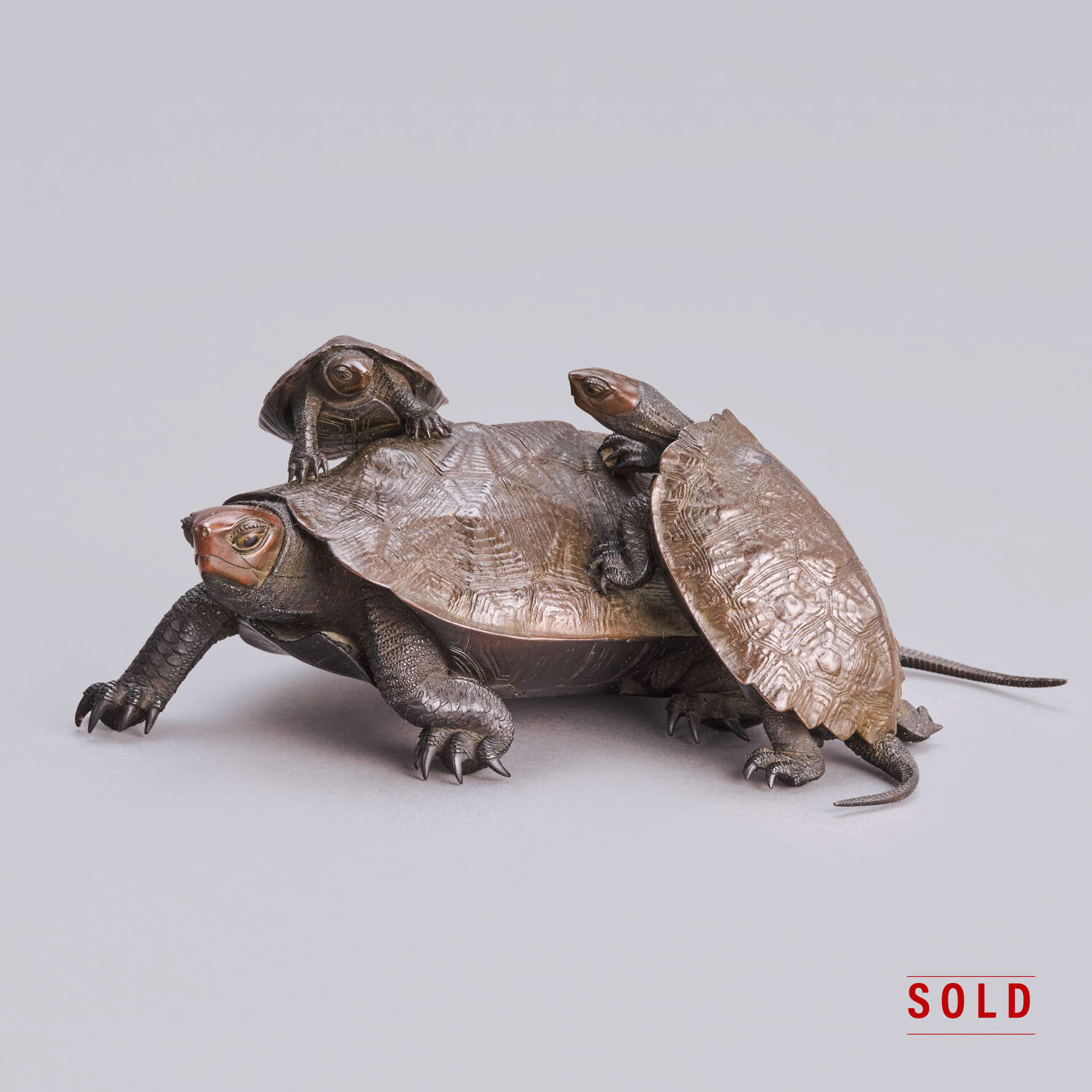
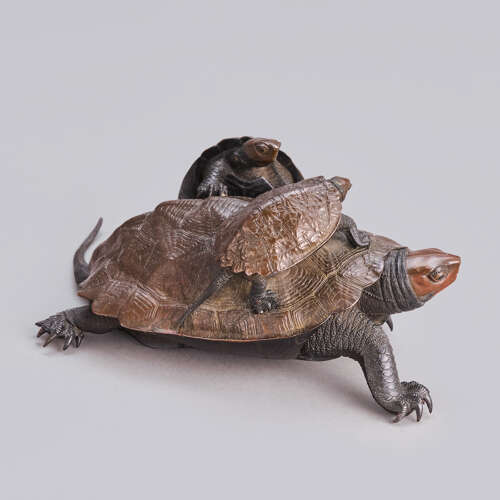
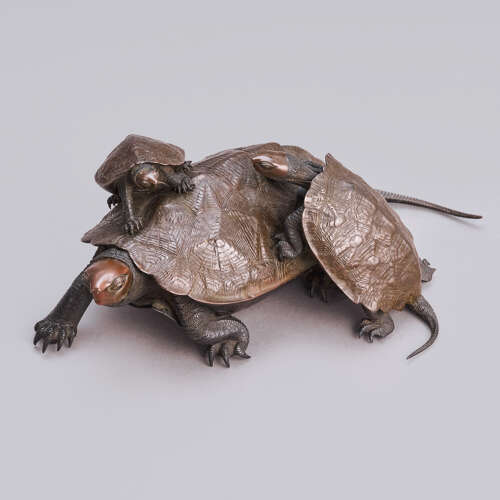
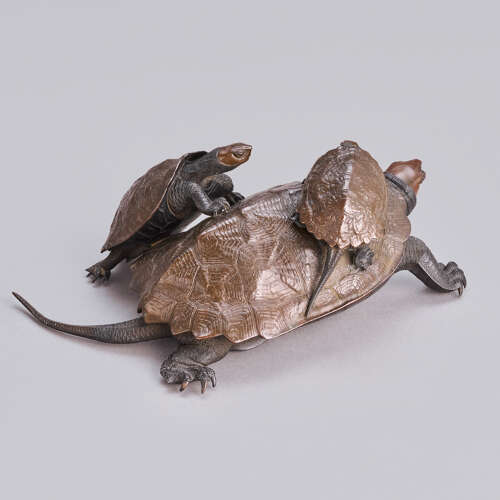
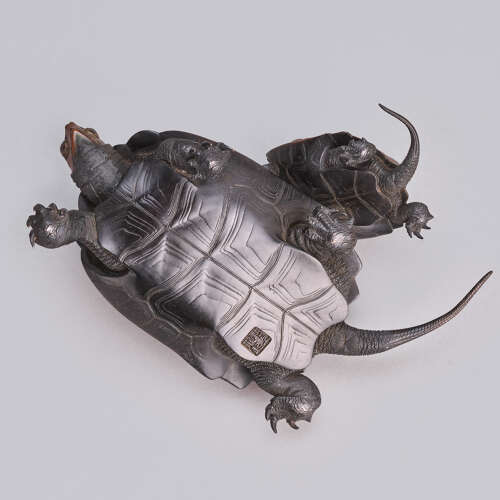
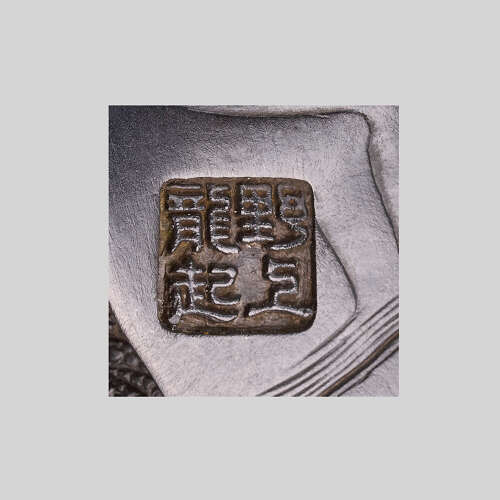
Japanese bronze group modelled as three turtles, the two smaller turtles animatedly climbing atop the larger one. The surface finely carved with lifelike texturing details, and the eyes inlaid in shakudo and gilt signed in a square reserve Ryūki 龍起, Meiji period (1868-1912).
The turtle (kame 亀) is symbolic of longevity and good fortune. This dynamic family grouping conveys not only these auspicious meanings but also a sense of familial unity.
The artist Nogami Ryūki 野上龍起 (1865-1932) was a prominent artist of the Meiji period. A graduate of the Tokyo School of Fine Art, Ryūki studied under Oshima Joun (1858-1940), one of the most celebrated metalworkers of the era and a professor at the Tokyo School of Fine Art. He gained international recognition by exhibiting bronze works, notably turtles, at the 1900 Paris Exposition Universelle. He also produced monumental bronze sculptures for the Imperial Household Agency, including the renowned statues of Kusunoki Masashige near the Imperial Palace and Saigo Takamori in Ueno Park, Tokyo. Ryūki was also mentioned in a 1910 article on metalwork, entitled ‘Japanese Art and Artists of Today’.
Reference: ‘The Golden Age of Japanese Okimono, The Dr. Kanter's Collection" by Laura Bordignon, Woodbridge 2010, Metalwork no. 242.
All our pieces come with a BADA Certificate of Provenance (The British Antiques Dealer's Association) and are inclusive of free U.K. shipping & insurance. Please inquiry for International shipping.