Code: 10295
Dimensions:
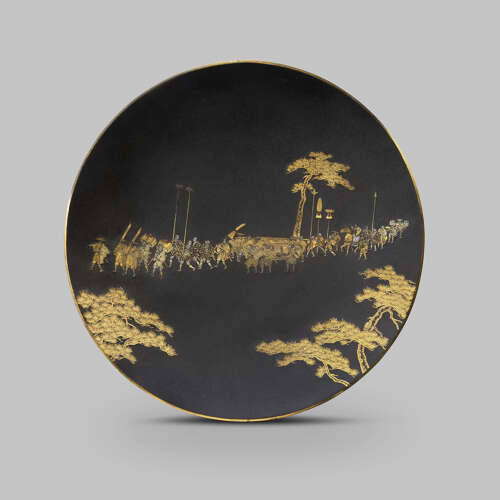
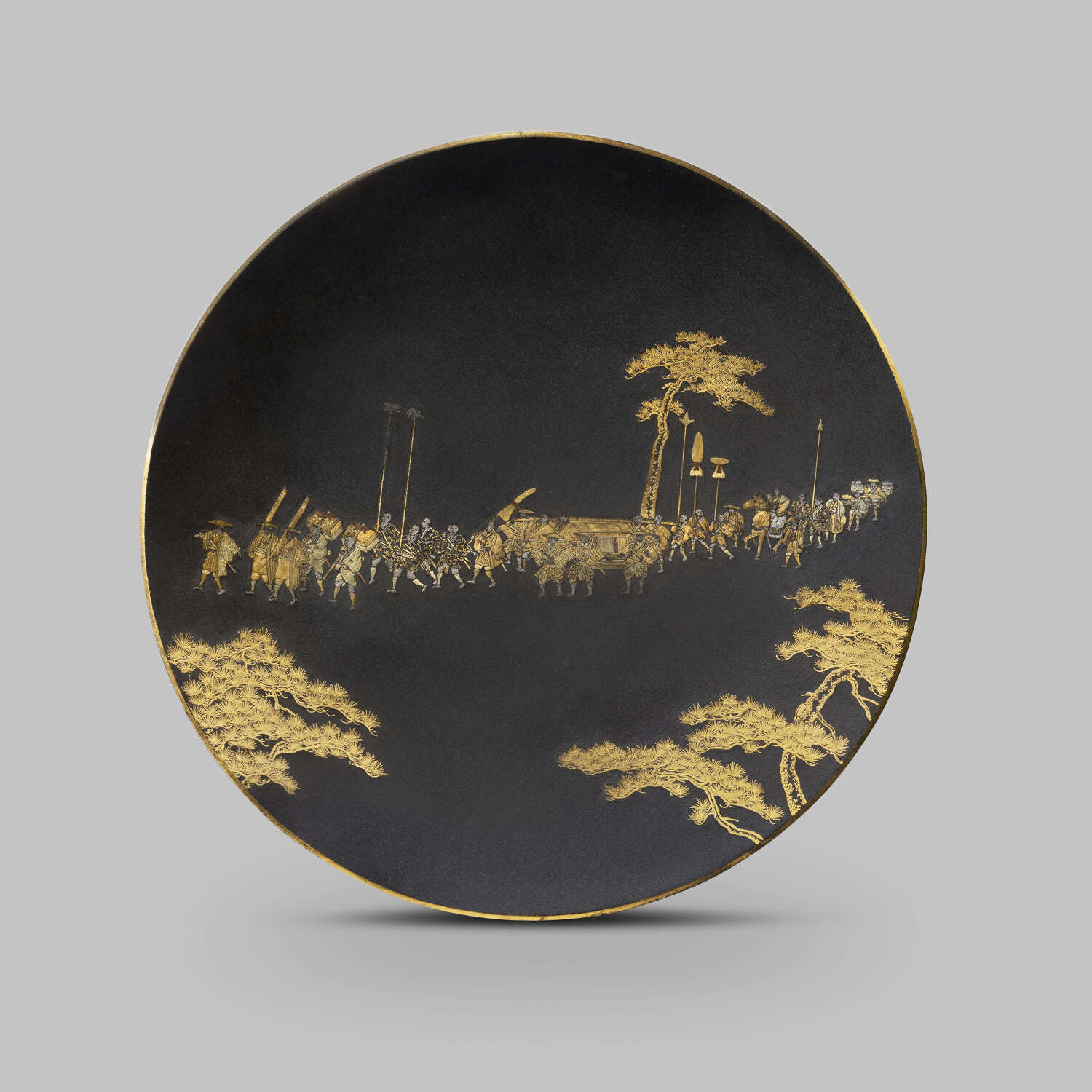
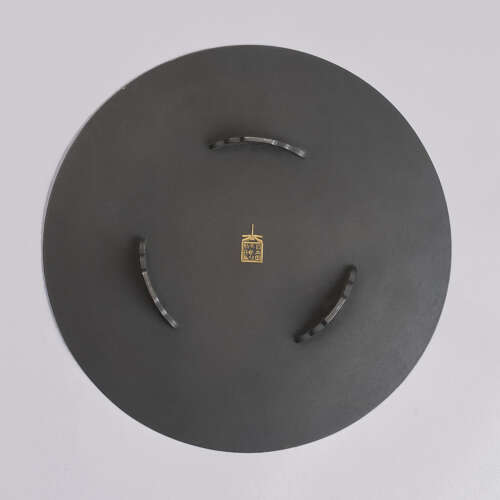
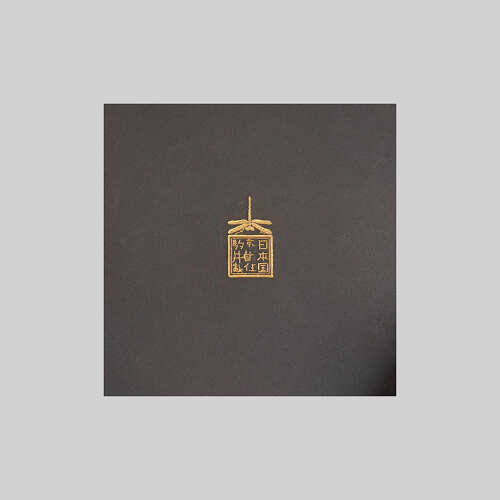
Japanese iron damascene dish exquisitely worked in gold and silver nunomezōgan against a rich matte black ground. The surface is animated with a detailed procession scene depicting a daimyō (feudal lord) being carried in a palanquin beneath spreading pine trees, accompanied by attendants in formal attire. The delicate metal inlay contrasts strikingly with the dark iron ground, demonstrating the precision for which Kyoto damascene work is renowned. The reverse is signed Nihon koku Kyoto jū Komai sei 日本國京都住駒井製 (made by Komai, Kyoto, Japan) and bears the distinctive dragonfly mark, Meiji period 1868-1912.
The Komai Company 駒井 of Kyoto was established in 1841 by Komai Seibei. Under the direction of his son, Komai Otojiro I 駒井⾳音次郎, the workshop achieved international acclaim, producing some of the finest examples of damascene, gold and silver inlay on iron in both traditional Japanese and Western-inspired designs. The company continued its production of high-quality metalwork until 1941.
Komai works were exhibited internationally, including at the Lewis and Clark Centennial Exposition in Portland, Oregon (1905), exhibitions in St. Petersburg (1908), London and Brussels (1910), and Vienna (1913), underscoring the firm’s global reputation during the late 19th and early 20th centuries.
Reference: 'Meiji no Takara 明治の宝: Treasures of Imperial Japan, the Nasser D. Khalili Collection', the Kibo Foundation 1995, Metalwork Part I, no. 36.
All our pieces come with a BADA Certificate of Provenance (The British Antiques Dealer's Association) and are inclusive of free U.K. shipping & insurance. Please inquiry for International shipping.