

Code: 10270
Dimensions:
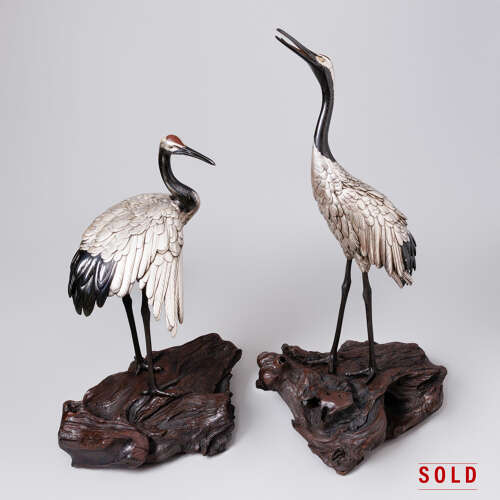
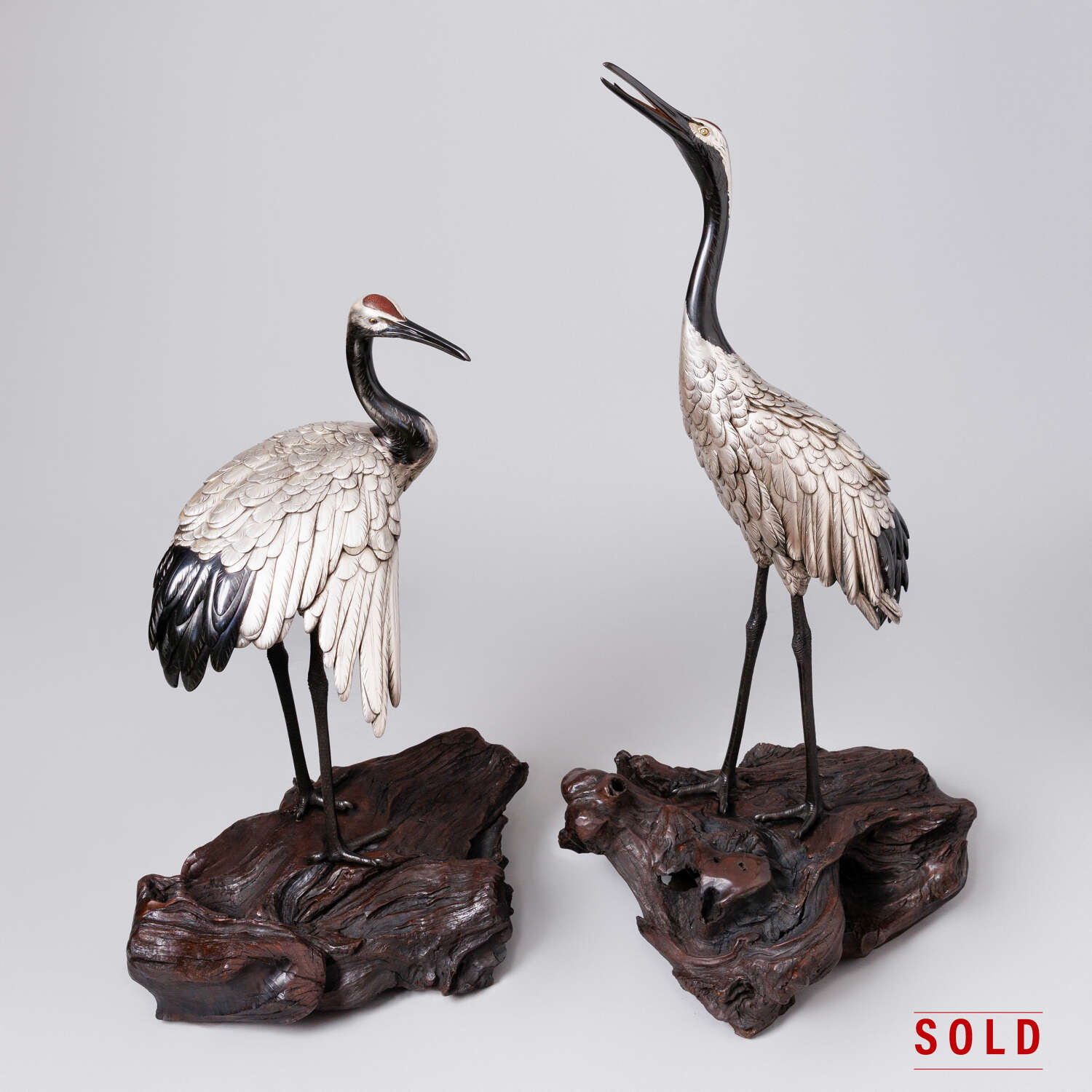
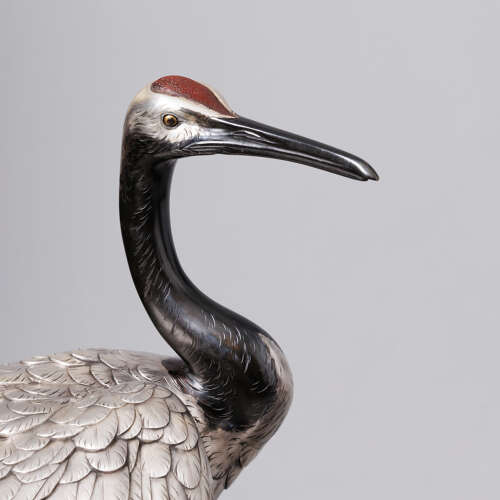
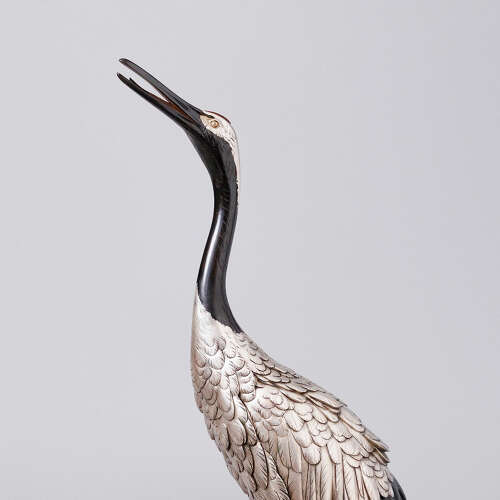
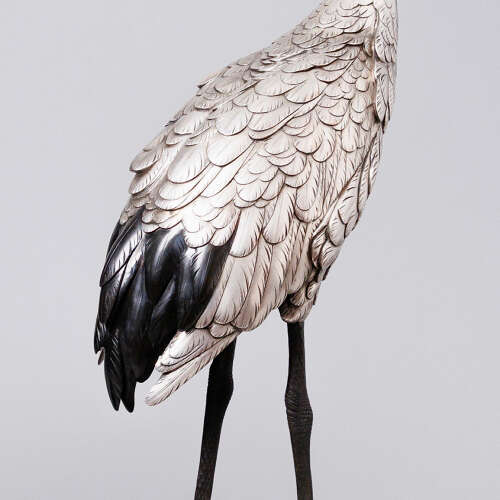
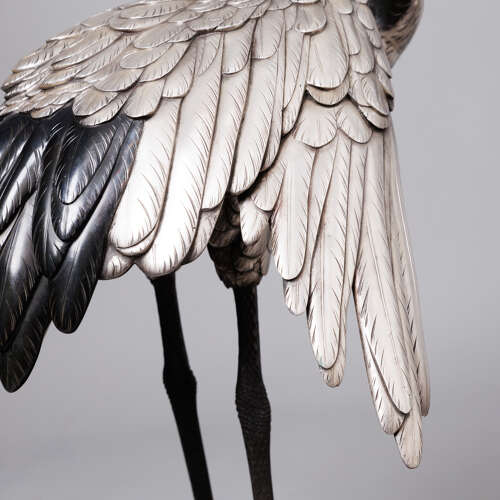
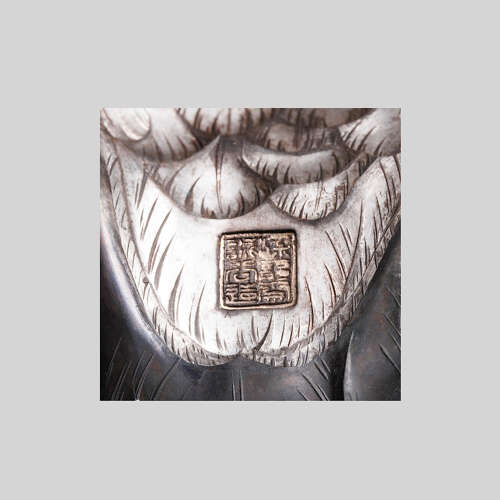
Japanese pair of silvered bronze Manchurian cranes one with its head raised in a calling posture, while the other stands gracefully with its wing slightly outstretched, capturing a moment of interaction between the two birds. The details worked in shakudo and gold standing on gnarled wood bases, signed in a square reserve Genryusai Seiya zo (made by Genryusai Seiya) 源龍斎誠谷造, Meiji period (1868-1912).
The Seiya workshop under the direction of Genryusai Seiya 源龍斎誠谷 was celebrated for its realistic depictions of animals, particularly during the time following the opening of the Tokyo Ueno Zoological Gardens in 1882, which likely inspired much of Seiya's work. The finely detailed craftsmanship of his bronze animal sculptures gained significant popularity among Western collectors during the Meiji era, reflecting both technical mastery and cross-cultural appeal.
Among the most esteemed motifs was the red-crowned crane (tancho-zuru 丹頂鶴), a tall and elegant bird deeply embedded in Japanese symbolism. In Japanese culture, the crane is considered an auspicious emblem of longevity, believed in folklore to live for a thousand years, as well as of good fortune and marital fidelity, due to its lifelong mating behaviour. Owing to these positive associations, cranes frequently appeared in decorative arts and were commonly depicted on the walls of temples and traditional homes.
This revered symbol also resonated with the aesthetics of the Art Nouveau movement, which embraced the crane for both its visual elegance and rich symbolic meaning.
Reference:‘Japanese Metalwork of the Meiji Period (1868-1912)', B. Davies, London 1990, nos. 3, 5, 33.
H 125cm (49.2 in.) x W 60cm (23.6 in.) x D 45cm (17.7 in.)
H 100cm (39.3 in.) X W 60cm (23.6 in.) x D 45cm (17.7 in.)
All our pieces come with a BADA Certificate of Provenance (The British Antiques Dealer's Association) and are inclusive of free U.K. shipping & insurance. Please inquiry for International shipping.