Code: 10285
Dimensions:
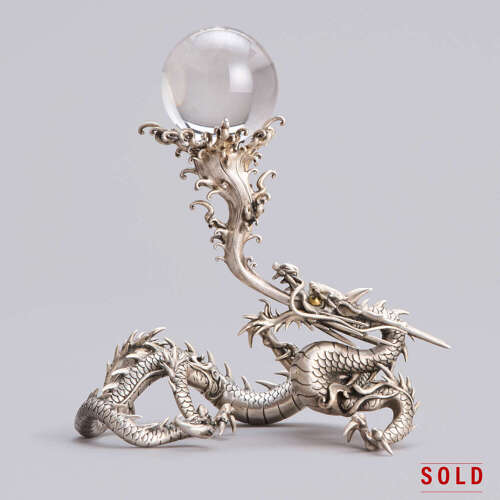
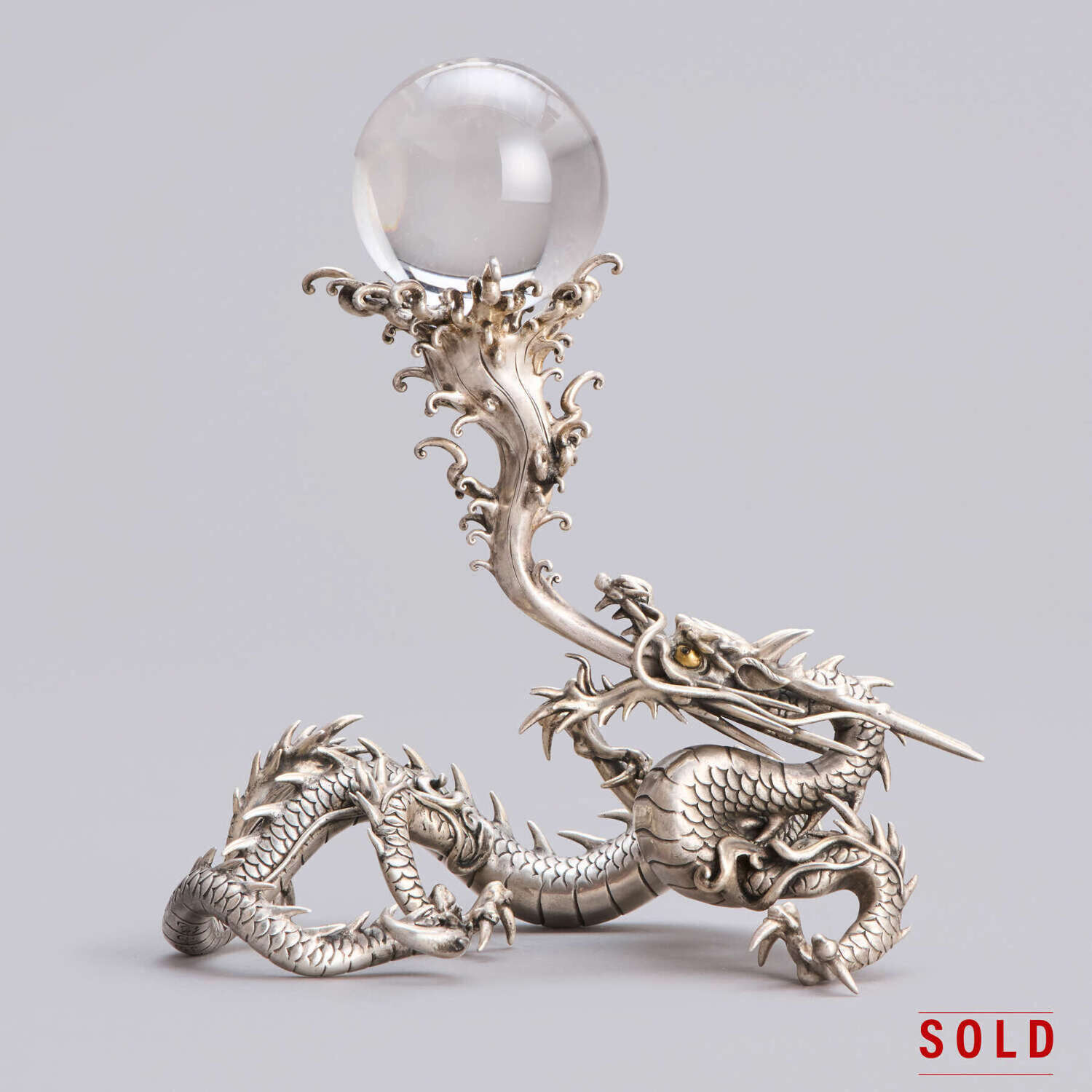
Japanese silvered bronze of a writhing dragon captured in a dynamic pose as it breathes forth a swirling water spout that supports the sacred jewel (tama). The dragon’s body is coiled, finely carved with meticulously detailed scales, claws, whiskers and horns, and highlighted with gilt-inlaid eyes that enhance its intense expressions signed in chiselled characters Seiryusai saku 晴龍斎作 (made by Seiryusai), Meiji period (1868-1912).
The artist Seiryusai 晴龍斎 was known for his skilled chiselling and naturalistic interpretations of mythological creatures and was active during the Meiji period.
The dragon (tatsu 辰/ryu 龍) is one of the twelve Zodiac signs and is a revered water deity symbolic of power and wealth. A dragon holding the sacred jewel in its mouth is a symbol of wisdom and spiritual energy.
Unlike the Chinese dragon, which has four or five claws, the Japanese dragon typically has three claws, as seen here.
One of the most significant figures in Japanese dragon mythology is Ryūjin (龍神), the Dragon God or Dragon King, who is said to rule over a vast undersea kingdom. As a powerful deity associated with the ocean, weather, and tides, Ryūjin plays a central role in both Shinto and Buddhist traditions. He is also traditionally regarded as a divine ancestor of the Japanese Imperial lineage, symbolizing the sacred connection between the Imperial family and the natural and spiritual world.
Dragon iconography is deeply embedded in both Shinto and Buddhist traditions, frequently appearing in temple carvings, shrine architecture, and ritual objects. The sacred jewel, often shown held in the dragon's fore claw or emerging from its mouth, is suggestive of the mythological lore and esoteric symbolism that enriched Japanese art of the Meiji era.
All our pieces come with a BADA Certificate of Provenance (The British Antiques Dealer's Association) and are inclusive of free U.K. shipping & insurance. Please inquiry for International shipping.