Code: 10260
Dimensions:
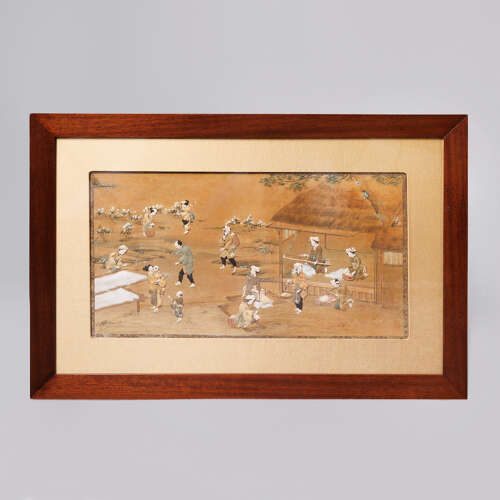
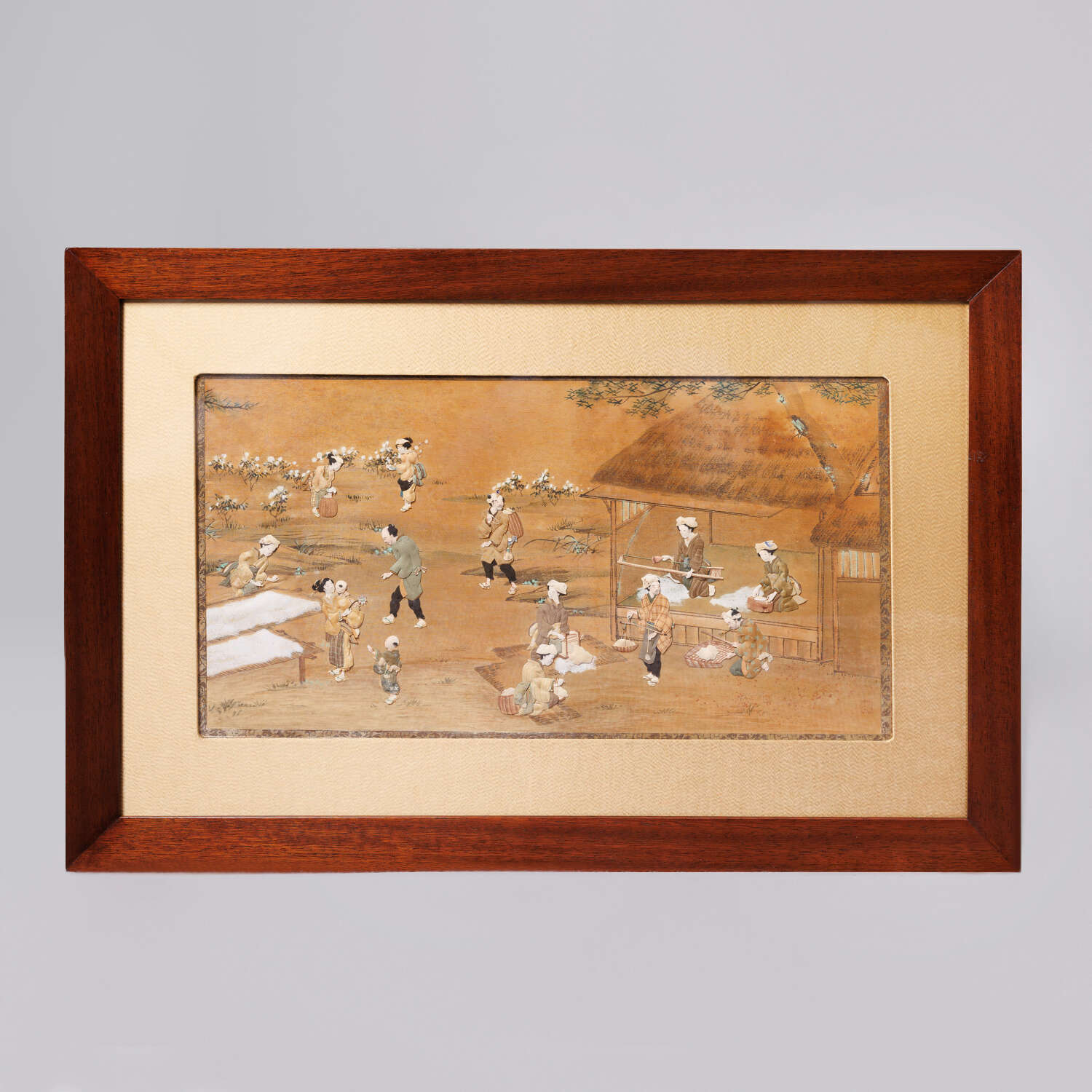
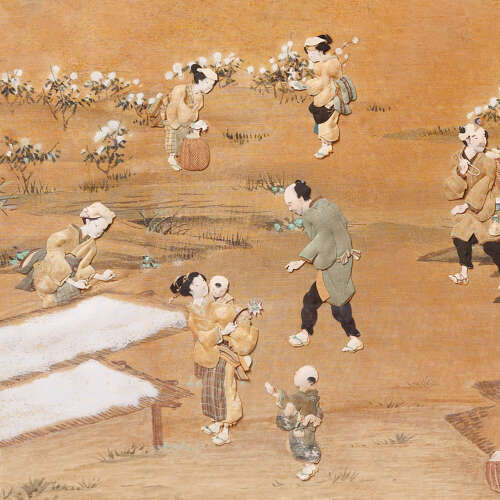
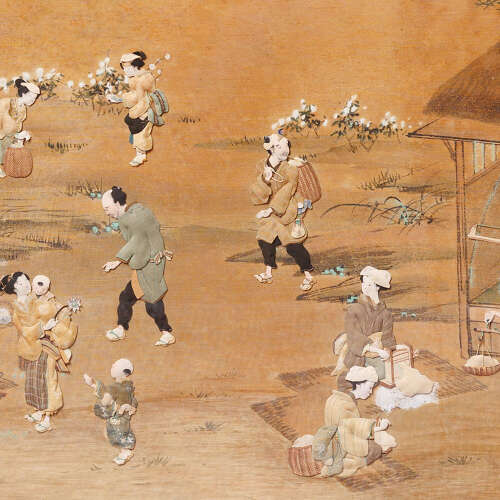
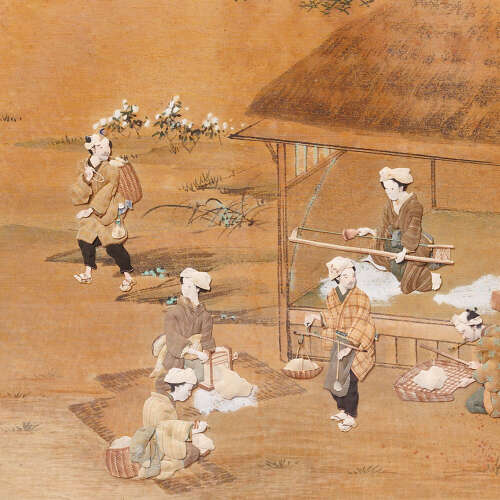
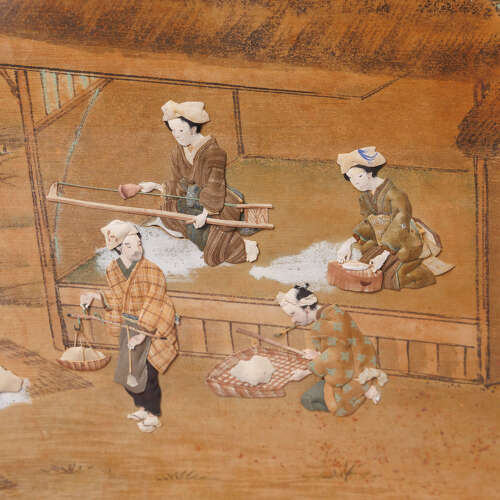
Japanese silk panel made in the Oshi-e technique depicting a lively rural scene with artisans in the fields harvesting cotton, while others are shown ginning (the process of separating cotton fibres from the seeds) in preparation for spinning. The figures are engaged in various stages of this traditional labor, set against a backdrop of cultivated fields and a thatched shelter, evoking Japanese rural life and textile tradition.
The panel is mounted in a wood frame with a gold silk mount, late Meiji Period (1868-1912).
Oshi-e 押絵 (lit. means pressed picture) also known as kiritori zaiku was a technique in which pieces were cut from an original drawing and transferred onto thick paper. These forms were covered with brocade, damask, silk or crepe pasted onto a background and then filled with paper or silk wadding to create a padded relief effect. Also very fine silver and gold threads were used to embellish the design. Only few recorded examples of this art survive today.
This technique probably dates back to the Muromachi period (1392-1573) and started in Kyoto among aristocratic ladies and later spread into Japanese society. This type of work was very time-consuming requiring lots of fine details to the dresses, faces and background within the setting. It was considered a lady's accomplishment alongside embroidery, ikebana and the tea ceremony. In the Meiji era, Oshi-e and other embroidery textiles art were exported to the West.
Reference: ‘Threads of silk and gold, Ornamental Textiles from Meiji Japan’ by H.T. McDermott and C. Pollard, the Oxford Ashmolean Museum Catalogue Exhibition, 2012, pp. 178-183.
All our pieces come with a BADA Certificate of Provenance (The British Antiques Dealer's Association) and are inclusive of free U.K. shipping & insurance. Please inquiry for International shipping.