Code: 10265
Dimensions:
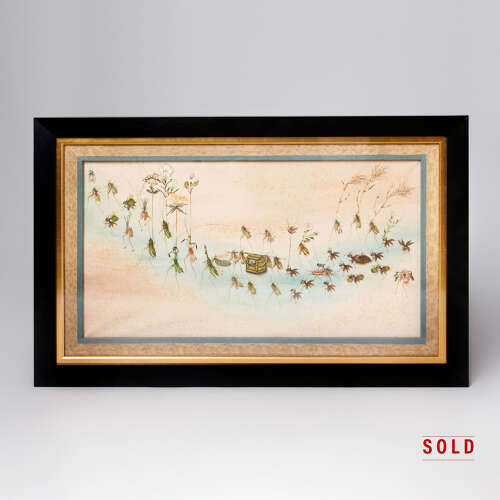
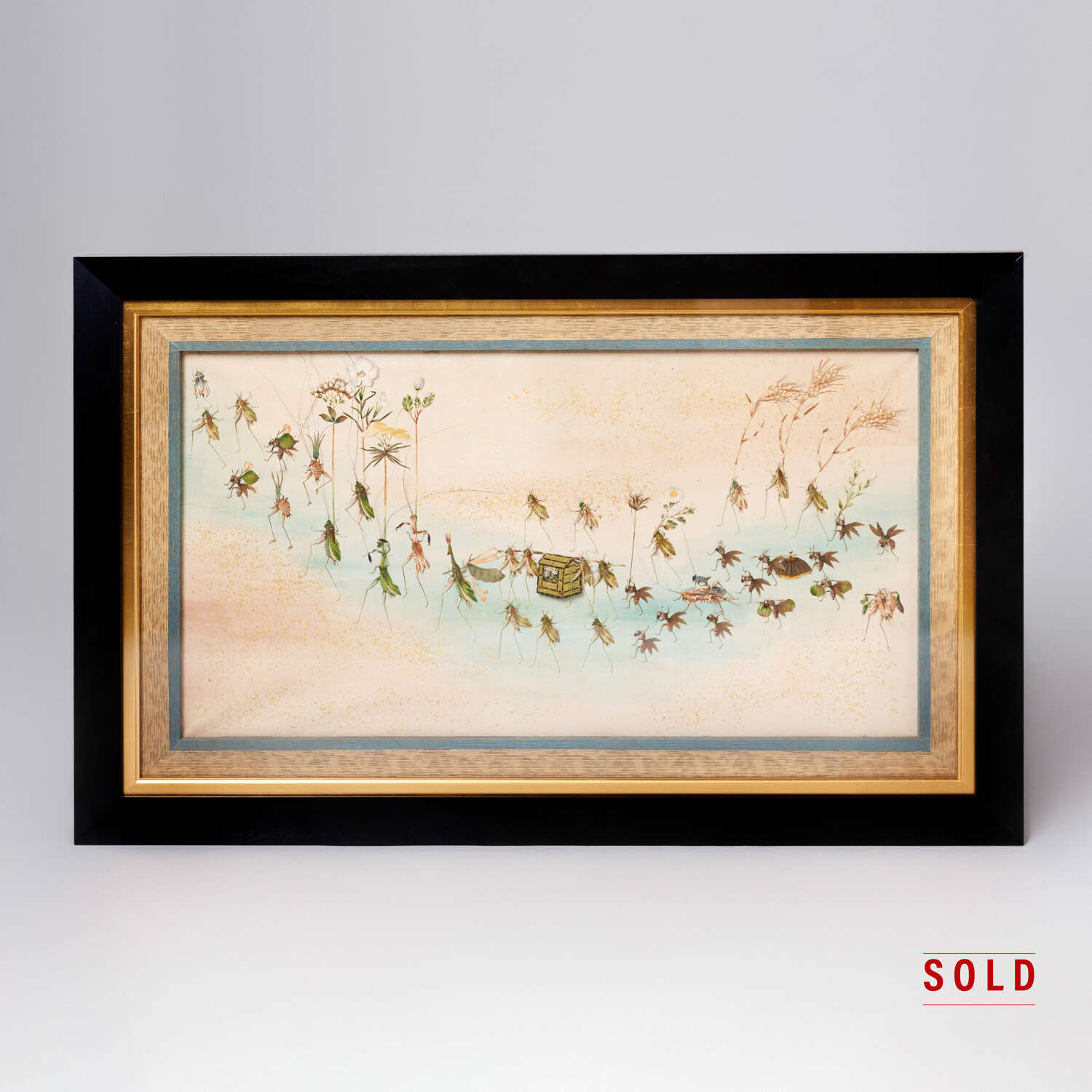
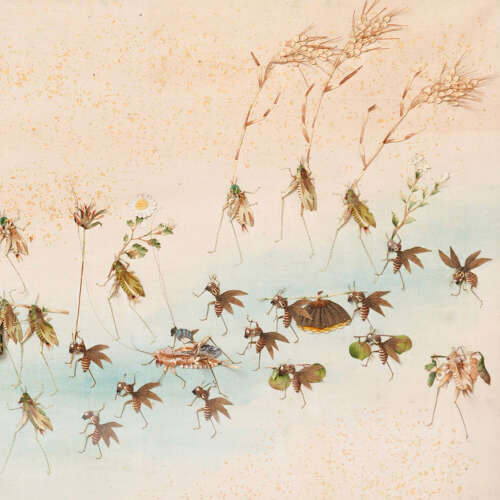
Japanese Oshie silk panel depicting a whimsical and and finely detailed procession of insects, representing a feudal lord’s journey from the Edo capital to his provincial domain.
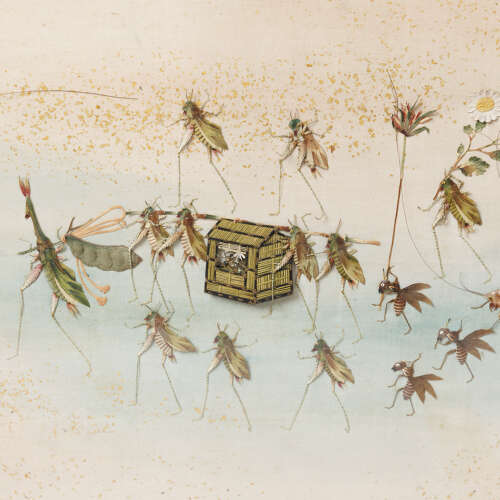
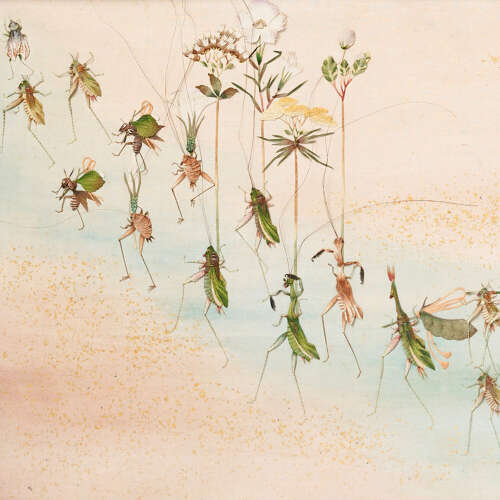
This anthropomorphic parade features crickets, grasshoppers, ants and wasps arranged in ceremonial roles, carrying flowers and miniature objects, escorted by insect ‘samurai and dignitaries’.
The three-dimensional figures are constructed in relief using traditional materials and techniques, with bodies padded in silk and crepe, embellished with gold and silver thread. The background is delicately brushed with grasses and sprinkled with gold powder, enhancing the ethereal atmosphere of the piece, late Meiji period (1868-1912).
Animal caricatures has a long tradition in Japanese art dating back to the 12th century.
Oshi-e 押絵 (lit. means pressed picture) also known as kiritori zaiku was a technique in which pieces were cut from an original drawing and transferred onto thick paper. These forms were covered with brocade, silk or crepe pasted onto a background and then filled with paper or silk wadding to create a padded relief effect. Only few recorded examples of this art survive today.
This form of textile art, which likely dates back to the Muromachi period (1392-1573) was initially practised by Kyoto aristocratic ladies and later spread into Japanese society. This type of work was very time-consuming requiring lots of fine details to the dresses, faces and background within the setting. It was considered a lady's accomplishment alongside embroidery, ikebana and the tea ceremony. By the Meiji era, Oshi-e had become a celebrated export art genre, admired in domestic and international exhibitions.
It was featured in the 'Fancy Articles' section of the Philadelphia Centennial Exhibition in 1876. The technique’s uncanny realism was later immortalized in Japanese literature notably by the mystery writer Edogawa Ranpo's 1929 ghostly novella Oshi-e to tabisuru otoko (‘The man who travelled with an Oshie-e’, Edogawa Ranpo zenshu (complete works of Edogawa Ranpo), 5, Tokyo, Kubunsha Bunko, 2005, pp.11-38.
For a comparative example see the Whyte Museum of the Canadian Rockies, Banff: Oshi-e silk panel of insects titled 'Procession of Daimyo Feudal Lords’ by Sakurai Seppo, gift of Catherine Robb Whyte O.C. in 1979, catalogue number SeP.15.01.
Also see the British Museum, London: painting on silk depicting a similarly stylised procession scene titled ‘Nishiyama Hoen: Parade of insects’.
Reference: "Threads of Silk and Gold, Ornamental Textiles from Meiji Japan" by H.T. McDermott and C. Pollard, The Oxford Ashmolean Museum Catalogue Exhibition 2012, pp. 178-183.
All our pieces come with a BADA Certificate of Provenance (The British Antiques Dealer's Association) and are inclusive of free U.K. shipping & insurance. Please inquiry for International shipping.